Wednesday, December 30, 2015

The joke's on you, reader.

So there are basically two main elements to the book:
1) Where the heck are they and how do they get out alive?
2) What's with this guy who's an admiral but clearly not an admiral?

The first is handled with classic suspense/escape sensibilities - they come up with a plan, nearly succeed, plan fails and they're marginally worse off than before. Lather rinse repeat. This part holds together fine, it's a standard sci-fi model.

The second annoyed me tremendously. Within a few chapters, one of the underlings has figured out who the 'admiral' is, but they don't tell us. They drop hints like we know a darn thing about the worlds they come from. It's a series of inside jokes and the reader is on the outside. Throughout the whole book, exactly one paid off at all for me, and it was way too little after way too long. All the answers come in the final chapter, when two characters sit down and conveniently explain everything to the reader in a simple dialogue that no two human beings would ever have.

Will i read the next in the series? I don't know. It will depend a lot on whether it's building on these characters, or just the world they live in.


(I received a free ARC of this book from the Amazon Vine program.)

Tuesday, December 29, 2015

"The Rest of Us Just Live Here" will ruin YA SF/F for you, in a good way

"But what about everyone else?"

This is what Ness asks in the introduction (though i guess i'm not sure it'll appear in the published version, one can never be sure when reading an ARC). It seems like every YA book these days features, as he notes, "a Chosen One, who has secret abilities he's never known about or an incredible inner strength that she doubted was there. They're the only ones who can defeat the Big Bad, topple the government, free the people."

Of the hundreds of kids who line up in District 12, only Katniss and Peeta are sent to the Hunger Games. There are plenty of Divergents, but only Tris is divergent enough to do what needs to be done. Harry's just one wizard in a school full of wizards. What about Katniss's second cousin, George, who lives on the other side of town? What about Lisa, an abnegation/erudite just keeping her head down and hoping for the best while handing clothes out to the factionless? What about Jill, the quiet girl in Ravenclaw who would be the best in her year except that Hermione is always better? They have lives, too, you know.

Ness offers up what would be a pretty generic coming-of-age story, a gaggle of kids finishing their senior year of high school, with all the checkboxes ticked: unrequited love (or is it?!), The Gay Friend, The New Kid, distant parents, college angst, etc. But each chapter leads with a plot summary of the equivalent chapter in a Generic YA Book, with all the tropes and cliches and whatnot. While The Chose One is saving the world, Mikey is wondering if he'll ever kiss his dream girl, if he'll stay friends with his bestie when they go off to school.

And the thing is, i hate Coming Of Age stories. 17-year-olds wangsting about the same thing everyone else around them is also going through just makes me snippy. But the juxtoposition made the story. By comparing Mikey and his friends to some unlikely teens out saving the world, it makes the mundanity of getting ready for prom into something much more potent.

Of course, there's also the humor - these are a bunch of normal kids leading normal lives in a world just like ours except that, every few years, Something Goes Horribly Wrong and a Chosen One has to fix it. Casual references to what is, for them, everyday life, are just absurd when they involve the Undead Army interrupting final exams.

(I received a free ARC of this book from the Amazon Vine program.)

Sunday, December 27, 2015

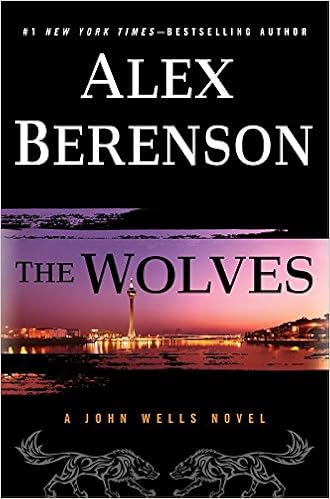
"The Wolves" by Alex Berenson takes the character John Wells to a darker place and I didn't care for it

This is Book #10 in the author's John Wells series of spy thrillers.  John Wells is a CIA agent (and later a deniable independent contractor for the CIA) who has spent most of his career infiltrating terrorist cells in Afghanistan and similar countries.  Along the way he converted to Islam -- his religious beliefs and practices form a distinct part of his character.  And like most "lone wolf" spy novel protagonists, he has a complicated personal and romantic life.

I haven't read all of the John Wells books but of the several I have read, this one was my least favorite.  The storyline follows directly from the previous book in the series, "Twelve Days," so you probably should read that book first to understand the context of how the characters relate to each other.

This book is almost the complete opposite of Twelve Days in tone and pace.  The pace in Twelve Days was frantic with Wells going from country to country -- Europe, Russian, Middle East, Africa -- in a very short period of time to try to keep the United States from being tricked into entering a war with Iran.  And it was heavy on the violence as well.  This book starts when events have had a little time to calm down and because there is not a deadline, the action moves more slowly from place to place and even within a set location.  The level of violence is significantly lower in this book, as is the degree to which Wells's physical ability to carry out his mission and escape from tight situations stretches the bounds of believability.  For the most part, Wells doesn't pull off physically improbable stunts.

However, instead of being about saving the United States, the story in this book is all about revenge.  I didn't like that part of the book -- it made the character of John Wells even darker than he has been throughout the series.

One interesting part was how much time the reader spends inside the heads of the bad guys.  They aren't just caricatures but fully formed people who justify their own actions.

If you like this series and this character, you most likely will enjoy this book as well.  I didn't care for the particular focus of this book, but it was still a fairly entertaining read.  Even though this book was merely OK for me 3 stars out of 5), I would still read the next book in the series.

I received an ARC free from the Amazon Vine program in exchange for a review.

Saturday, December 26, 2015

"Real Tigers (Slough House)" by Mick Herron is not the spy book I was expecting but definitely worth reading


This was not at all the book I was expecting from the blurb on the back of the book. I had not read any of the other Slough House books and always associate spy novels with nonstop action and page-turning speed. So I was a bit taken aback when the book started out fairly slow and "wordy" (by which I mean there are a lot of full paragraphs and not just the spare action and dialogue oriented prose you might see in an American thriller). Clearly this was not going to be a page-turner and I was tired and just wanted some mindless escapism so I nearly quit reading but was convinced to keep going and am glad I did.

The Slow Horses (which I only just now realize is a play on words of the building where they "work") are MI5 agents who have been pulled from official duty for various screw-ups and given make-work assignments designed to make them quit. These folks are not James Bond or any of the great fictional British spies. They are not especially heroic or competent and they don't appear to like each other very much. A lot of the wordy part at the beginning of the book gives the reader insight into these characters and what messes they have made of their lives. It can be slow reading, especially if you are expecting a spy thriller. If you get tempted to stop reading -- just keep going. There is a point to what you are reading and things will eventually start moving.

Just about the time you think the action is really going to start, you get more background but keep with it. This is definitely a book written by someone with a degree in English, not the typical American thriller that is often a mental movie script in novel form. It is much more character driven with a fairly involved plot. Sit back and enjoy the writing.  One of the benefits of so much of the book being about the characters and not just solid action is that it is not critical to have read earlier books in the series to be able to understand and enjoy this one.

I don't want to give out any plot details because it would spoil the surprises the author has built into the story. Right around page 114, I realized what kind of spy book this was going to be -- and it was nothing like I expected. For the rest of the book there were plots and counter-plots until you wonder who the good guys and bad guys really are and who is going to come out on top in the end. And I finally got more of the action I was originally expecting, even though the Slow Horses are not your typical spies.  By the time I finished, I was really glad I had kept reading even though it wasn't the book I had expected. This is definitely a thinking person's spy book -- a literary spy thriller. If all you want is page-turning action, this might not be the book for you. But I still recommend it because it will keep you on your toes.

I received an Advance Readers Copy of this book through the Amazon Vine program in exchange for a review.

Thursday, October 8, 2015

Review: THE HUNGRIEST MOUTH IN THE SEA (by Peter Walters)

bookcover of THE HUNGRIEST MOUTH IN THE SEA by Peter Walters

THE HUNGRIEST MOUTH IN THE SEA is a bright colorful book that is going to appeal to young animal lovers and adults like me who love to share science and nature with youngsters.

I think it's a great book to share because of the fun artwork and because it makes a nice read-aloud.

Floating out at sea, a cloud of green plankton
drifts with the tide, soaking up the sun.

But look-- a hungrier mouth
in the seas of the south!

Who would you say is heading this way?

It's not immediately clear but the focus of THE HUNGRIEST MOUTH IN THE SEA is a little unusual.  I don't know about you but so many ocean books that we've read are generic.  Peter Walter's book though focuses on the South Sea and it's unique Food Web. The author starts with algae and moves up from krill to white sharks and beyond.  The hook is 'who is the hungriest mouth'.

If you aren't acquainted with them one thing you might want to know is that these Arbordale Books allow you to adapt how you use the material to your child and situation.  If you want to get into more depth, for example, you can use the "For Creative Minds" section at the end of the book. These sections have more information and some activities.  There is predator and prey matching for example and food web cards and even a card game you can play.  Other activities can be found online!

--The Accelerated Reading level is 3.2.
--The Lexile level is 670.
--Can be shared with much younger children as the artwork is very appealing.

SUMMARY
I really like this book.  I found the artwork very appealing and I really like that the focus was on the South Seas eco-system.  The book is appropriate for a fairly wide range of children; though written on the 3rd Grade level.

I could see buying this for the home shelves or for a classroom book basket.

Pam~


HUNGRIEST MOUTH IN THE SEA:
(Arbordale Publishing)
by Peter Walters

Disclosure:  Review Copy received from publisher

Tuesday, August 4, 2015

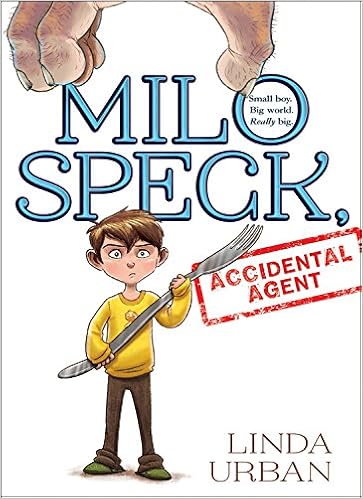
"Milo Speck, Accidental Agent" is a delightful Dahl-esqe fantasy adventure for younger middle grade readers

I am much much older than the target audience for this book, but it grabbed me from the opening paragraph.  I am quoting  from the ARC, so something might have changed in the final published version of the book, but it gives you a good sense of the flavor of this book:

Milo had read about magic before.  He knew that kids in stories sometimes found magic in secret drawers or hidden away in attics, and he had always hoped that if he were to find magic, it would appear in the form of a mysterious silver coin or a doorway to an enchanted world.  But when magic came to Milo Speck, it came in the form of a sock.  

A sock?!?  Something about that passage captured my attention and pulled me into a story about a very small boy sucked into a world of hilariously doltish (but very large and dangerous) ogres who enjoy snacking on boys.  The story had a very familiar feeling of tongue-in-cheek absurd humor combined with heart but it wasn't until reading the author's note at the end that I realized why -- one of the writers she credits for inspiration is Roald Dahl.  It would be a disservice to compare any writer to the great Roald Dahl, but younger readers who like the kind of humor found in books like "The BFG" should really enjoy this book as well.

Milo Speck, is an unlikely hero.  He is small for his age and his "Grandmother" dresses him in ridiculous clothes that she buys on clearance.  As this book opens, he is wearing a googly-eyed duck sweatshirt that "quanks."  Through an unlikely act of magic,* Milo is transported to Ogregon where he has to avoid becoming an ogre snack, rescue some other kids, figure out what his Dad is doing there, and find a way back home.   There is a lot more to the story, but I don't want to spoil the fun by giving away anything more than what is in the publisher's book blurb.

I really enjoyed the combination of silly fun and adventure in this book and would recommend it for readers on the younger end of the 9-12 age range.  It would also be appropriate for children younger than 9 whose reading level is beyond their years.  Older children might like it as well, especially if they aren't yet ready for the more mature Young Adult books.

It's a great book to recommend for boys who will enjoy going on this adventure with Milo as he  uses his wits and heart to survive the ogres.  Girls will enjoy it as well, but I always like to find books that I think will appeal to boys to encourage them to read more.

*For parents who are uneasy with the idea of magic in books, I hope you will not avoid this book on those grounds.  Milo is not a wizard and has no magic abilities.  He's just a regular boy. The "magic" in the book is mostly confined to the ability to travel between the regular world and Ogregon, though there is brief discussion of some other "magical" creatures in other parallel lands.  The characters themselves don't do magic.

I received an Advanced Readers Copy free through Amazon's Vine program in exchange for a review.

Saturday, April 11, 2015

The Sandwich Test

I'm not sure how i came up with the Sandwich Test. I suspect the idea started with one of Yahtzee Croshaw's critical video game reviews, wherein he often compares disappointing characters to various inanimate objects. However, the Sandwich Test is now my primary metric for judging novels. It goes like this:

Would the story be meaningfully different if you replaced the main character with a sandwich?

In too many of the YA novels i've been reading lately, main characters might as well be sandwiches. They don't do anything, they just are. People do things for them, or about them, or around them. People move them from one location to another. These characters, and every one that leaps to mind is, alas, female, might as well be a sandwich for all it matters to the story.

And why a sandwich, you ask? Why not a pebble or a manequin or a sock? Well, two reasons. First, it's funnier, and keeps me sane when, for some reason, i decide to stick it out in a book that already failed the test. Second, there are actually a variety of sandwiches out there, and that allows other characters to interact with the sandwich in ways they wouldn't necessarily interact with a pebble. Cribbing from one of my own reviews, in which i compare a character to a pastrami sandwich:

But of course, people have strong feelings about her. Some are repulsed (perhaps they're vegetarians?), some want her but know to stay clear (on a diet, maybe?), whereas others want to possess her (pastrami connoisseurs, in this example).

It's been a while since i read the Hunger Games trilogy, so i can only use it for general examples, but here goes:

In book 1, Katniss is a person. She's struggling to keep her family alive, hunting and trading and dodging the cops. When Prim is selected, Katniss leaps forward to volunteer herself in her sister's place. In the games, she makes alliances, she attacks and defends, she even stands up to the Powers That Be at the conclusion of the games.

By book 3, she's a Sandwich, being handed around by various factions. She does what people tell her, and if no one has anything for her to do, she sits there. By the end, she's not even a good sandwich, she's a day-old soggy cold cut sandwich.

So, readers, next time you're frustrated with a character who doesn't DO anything, use your spare time deciding exactly what kind of sandwich they are. BLT? Club? Hummus wrap?

And authors, please, don't write any more sandwiches.