Showing posts with label history. Show all posts

Friday, February 6, 2015

Mr. Smith Goes to Washington -- via Hollywood


If you're a non-fiction fan, you probably already know that university presses are a treasure trove for readers of history, film studies, literary criticism, etc. While a few academic publishers such as Oxford University Press and University of California Press have been targeting general audiences for many years, now many university presses are slapping colorful covers on their books and toning down the academese to appeal to a wider audience.

Just when I was starting to take this bounty for granted, here comes a new development -- audiobook editions. I was able to preview this book, Showbiz Politics: Hollywood in American Political Life (University of North Carolina Press), as an audiobook, courtesy of AudioBook JukeBox (the NetGalley of audiobooks) and Blackstone Audio. It's available to buy from all the usual sources: Audible.com, iTunes, and others as an audio download or as an MP3 CD. AudioBook JukeBox sent me a download via the HighTail app which I was not able to get to work, but I was able to listen to the book on the Scribd audio app (with my subscription). The Scribd audio app is not as slick as Audible.com's audio app, but it's good enough to do the job.

And the book? Splendid. A fine history of the connection between Hollywood and Washington D.C. Not only did that relationship start long before JFK, it began almost as soon as Hollywood did. Hollywood got into politics in the 1920s with California governors' races, but by the presidency of Californian Herbert Hoover, Hollywood was fully involved in national politics.

Author Kathryn Cramer Brownell takes us from those early days up to the Reagan years, and the Clintons, barely mentioning the Carter/Ford race, the Bushes, or Obama. The emphasis is on the war years of FDR and then of Kennedy and Nixon. While I hadn't really thought of Nixon as having been particularly Hollywood-connected, he had plenty of Hollywood supporters and as a native Californian was also well aware that Hollywood could help (or hurt) him and lobbied accordingly.

The downsides of listening to rather than reading this book were that, especially during the section on World War II, the alphabet soup of abbreviations and acronyms was hard to keep track of without a scorecard, and that I didn't have access to the bibliography as I would in the print book. On the plus side, the narration by Pam Ward was clear and easy to listen to for long stretches.

An excellent look at American political history as well as what I hope will be the beginning of a trend in academic press audio publishing. 


Showbiz Politics: Hollywood in American Political Life
by Kathryn Cramer Brownell
Narrated by Pam Ward
11 hours 35 minutes unabridged
University of North Carolina Press 2014
audiobook published by Blackstone Audio 2014

Tuesday, January 20, 2015

A Snapshot of Chinese Culture


Title:  China A to Z
Author: May-Lee Chai, Winberg Chai
Publisher: Plume

China A to Z is a great little cultural encyclopedia for those of us who may be a bit intimidated by travel to China. Addressing everything from popular scandals to how the Chinese view interracial relationships (especially interesting to me as my daughter is half Chinese), this is a very worthy snapshot of modern day Chinese Culture.

Separated into categories, it's easy to skip to the categories that most interest you, but each entry is worth reading. Not only do you learn about things like the types of food you may be served, but why they may serve it to you, and how to avoid eating certain things while still remaining sensitive to the needs of your Chinese hosts.
    
Although the book is honest about some of the negatives about Chinese culture (i.e. the treatment of some of their ethnic minorities), the overall impression is of a country of warm, friendly people who have a real curiosity about non-Chinese.

The book made me want to travel to China and when I eventually do get there, I'll definitely use this as a reference!

*ARC Provided by Netgalley for review purposes.

Wednesday, November 26, 2014

Best Books of 2014

Just in time for the holiday season, here are some of our bloggers' picks for the best fiction and non-fiction books of 2014. Rest assured, we agonized over these choices. Please tell us why you agree or disagree in the comments. And if you think there's a book we overlooked, let us know!

__________

Silea's picks:

Fiction: Red Rising, by Pierce Brown
This book starts with a gut-punch and never lets go. While relying on many of the tropes now common in YA fiction (member of a suppressed class trying to bring the system down, etc), it manages to be entirely unique.


Non-fiction: The Vinedresser's Notebook, by Judith Sutera
This book is simple, meditative, and contemplative, based primarily on grape vine metaphors to teach patience and humility. Though short, it's powerful. I don't believe it's possible to read this book and not become a better person in the process.

__________

Suzanne's Picks

Fiction: An Unnecessary Woman, by Rabih Alameddine:
Aaliya isn't the most likable fictional character: she shuns her neighbors, preferring books to reality. But then her reality is Beirut, through civil war, chaos and lots of family upheaval. Aaliya, however, is an astute, wry observer of those realities, and Alameddine is a lyrical writer: the combination has made the novel, one of the first I read this year, one of the most memorable and my favorite.


Non-fiction: A Spy Among Friends, by Ben Macintyre
Focusing on Kim Philby, one of the British spies whose betrayals rocked the British establishment in the 1950s and 1960s, this takes a different approach to the story, telling the tale through the eyes of Nicholas Elliottt, Philby's closest friend in MI6. For Elliott, Philby's betrayal was more than just treason: it was a personal violation of the most profound kind. The book is both a fast-paced spy yarn and a heartbreaking tale of betrayal and misery.

__________

JWP's Picks

Fiction: Crossover, by Kwame Alexander
Josh Bell thinks his school year is going to be all about basketball and how amazing he and his twin brother can be on the court, but life has something else in store.  His words zing off the page showing how great poetry can be to illustrate life's good and bad moments. 

Non-fiction: Birdmen: The Wright Brothers, Glenn Curtiss, and the Battle to Control the Skies, by Lawrence Goldstone
A title with a little bit of everything, Goldstone makes the history of heavier than air flight available to even the least scientific of minds.  Thrills, chills, spills and daredevils from the golden age of early aviation all highlight the battle to get airplanes and their inventors off the ground. 

__________

Dunyazad's Picks

Fiction: The Book of Strange New Things, by Michel Faber
I judge the quality of a novel by how much I wish I could be reading it when I'm doing other things. In this case, those other things included visiting friends for the weekend and attending the National Book Festival, but I still found myself sneaking out this book to read a few pages whenever I could. The story of a missionary witnessing to aliens on another planet while his wife experiences apocalyptic conditions back on earth was unlike anything I've read before.

Non-Fiction: How We Learn, by Benedict Carey
This is probably the non-fiction book that's had the most real impact on my life this year. It's a fascinating synthesis of recent and not-so-recent findings in learning science, or in practical terms, a book full of evidence-based suggestions for how to learn more effectively and efficiently. Besides the helpful ideas themselves, I found it extremely encouraging just to read that forgetting is not the enemy of learning, that there are specific techniques that make it easier to remember foreign vocabulary within a reasonable time frame, and so on. This book gives me reason to hope that I'm nowhere near the limits of my abilities yet.

__________

TakingaDayOff's Picks


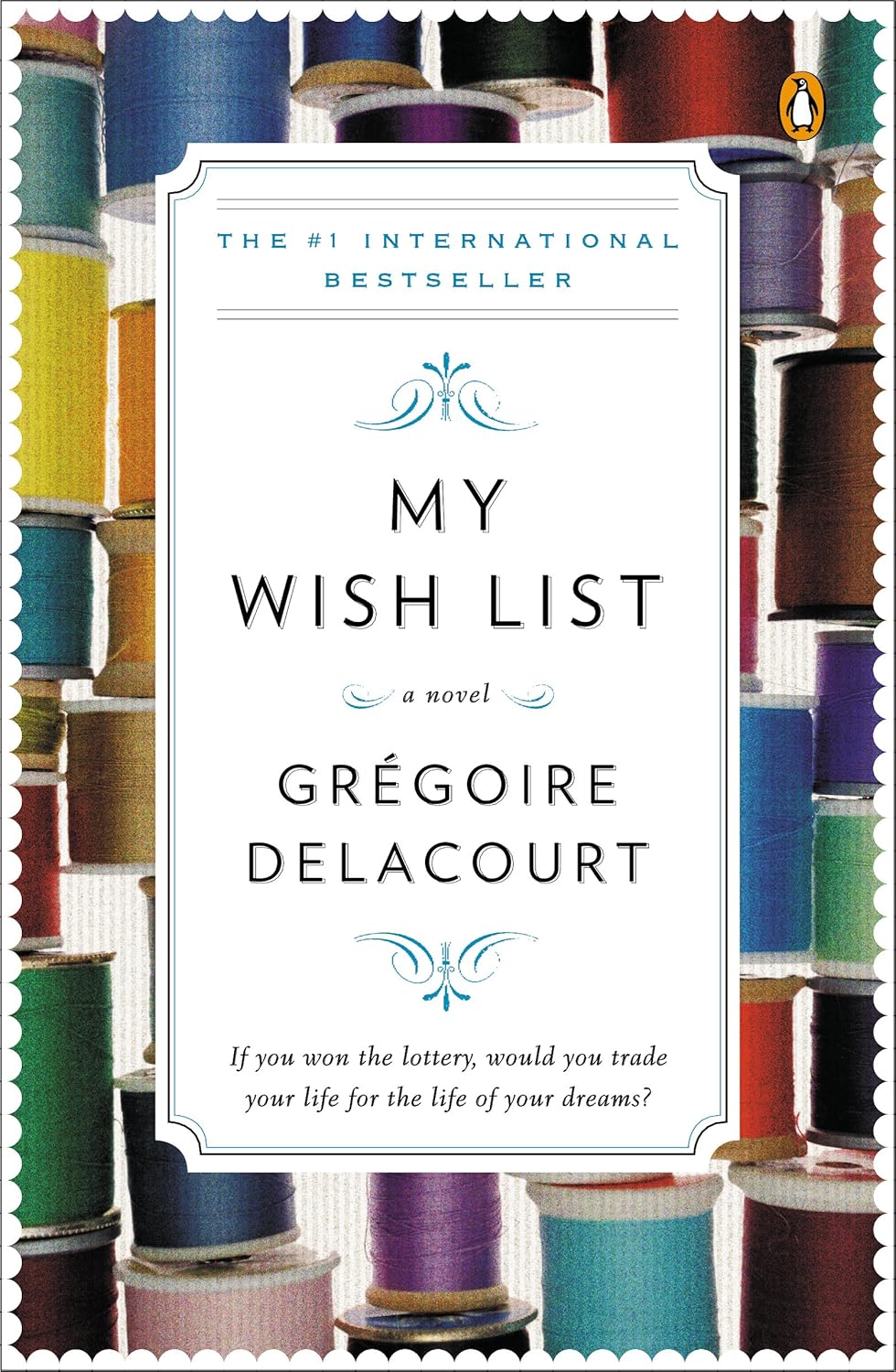
Fiction: My Wish List, by Gregoire Delacourt
This book asks an unoriginal question (What if you won the lottery?) and answers it in a completely original way. A compact story that felt simultaneously surprising and inevitable.


Non-Fiction:  The Shelf: Adventures in Extreme Reading, by Phyllis Rose
A book in which reading a random shelf of library books becomes a discussion about book covers, undiscovered authors, blurbs, how libraries decide which books to discard, dog training, and occasionally, literature. The Shelf combined two of my favorite topics, books about books and harebrained schemes, brilliantly.


__________

Sandy Kay's picks

 Fiction: Red Rising, by Pierce Brown
If you mixed together a dash each of Lord of the Flies, Hunger Games, Hogwarts Academy, and Roman history and set it hundreds of years in the future you might come up with this book. But it is fresh and exciting even with all those familiar elements. I could barely put it down and can't wait for the next book in this trilogy due in January 2015.

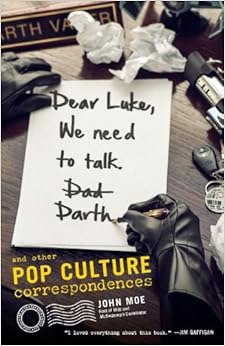
Nonfiction: Dear Luke, We Need to Talk, Darth: And Other Pop Culture Correspondences, by John Moe
I read mostly for entertainment so don't do much nonfiction. This collection of John Moe's imagined letters, e-mails, text messages, and other correspondence behind some favorite pop culture references made me laugh. 

__________

CK's picks

Front Cover: THE SECRET OF MAGIC by Deborah Johnson. Courtesy Penguin PutnamFiction: The Secret of Magic, by Deborah Johnson
Deborah Johnson stole my heart back in January with The Secret of Magic, a masterful interweaving of tradition, resilience, injustice, idealism, and respect. In impeccably measured prose that is all the more beautiful for being unassuming, Johnson introduces us to an idealistic young lawyer, a gentle and righteous father, and the author whose words have impacted both their lives. Even as she evokes the tensions of the post-WWII South, she also layers in such talismans as ladybugs, mistletoe, and a mailbox full of bluebirds. These and many other moments sing of simplicity while they hint at deeper meaning. 

Non-fiction: The Nazis Next Door, by Eric Lichtblau
Front Cover; THE NAZIS NEXT DOOR by ERIC LICHTBLAU. Courtesy Houghton Mifflin Harcourt. Coincidentally, my other selection also centers on events in the U.S. just after WWII. Eric Lichtblau's The Nazis Next Door: How America Became a Safe Haven for Hitler's Men is a thorough, professional, and incredibly frustrating exploration of the warm welcome the U.S. government extended to a number of people involved in the German war effort. This book is an implicit indictment of the choices some members of our government made that ran counter to the tenets on which we like to think the social contract of our country exists. When you tackle this worthwhile book, give yourself permission to partake of it in 50- to 60-page increments. 


__________


Note: Most, if not all, of these were received as ARCs through the Amazon Vine program. 

Tuesday, November 18, 2014

How We Remember

MUSEday Tuesday

Section 60: Arlington National Cemetery


I visited Arlington National Cemetery as a teenager, and still remember how awestruck I was by its solemn beauty and its vastness. Heroes slept there, I knew, but they reposed at a remove. My visits since then to other veterans' cemeteries have been similar, except when I'm at the graves of loved ones whose lives overlapped mine. Then, my visits are quiet, largely solitary experiences, confined to the draping of a hand-sewn lei or the positioning of flowers, and accompanied by memories and tears.  

Front Cover: SECTION 60: ARLINGTON NATIONAL CEMETERY, courtesy Bloomsbury PublishingThese moments all have their place, but they are so very different from what Robert M. Poole describes as the everyday events at Section 60 of Arlington National Cemetery, where a number of veterans of Iraq and Afghanistan are laid to rest, intermingled with veterans of earlier conflicts. 

With eloquence and grace, Poole invites us to meet some of the many pulsing hearts that make Section 60 of Arlington National Cemetery live on.

Family members and friends visit the graves of these veterans, leaving flowers, keepsakes, and mementoes, and drawing comfort in the bittersweet process of revisiting everyday memories as well as the ache of recalling how their loved ones died.

Somehow, those left behind -- whether civilians or veterans, whatever the year their loved ones passed -- have built a community. Poole touches on this by showing interrelationships, such as Vietnam veterans "being there" for those mourning more recent losses.

With compassion and respect, he also explores the toll of such combat-related issues as post-traumatic stress disorder (PTSD) and other challenges that active-duty servicepeople and veterans both confront. Notably, neither he nor his military and civilian sources shies from such painful subjects, including suicide.

Reading stories like those shared here can be extremely emotional, but it is necessary.... Necessary for understanding fear and bravery, necessary for understanding what makes a person willing to die for a comrade or a principle, and necessary for working through grief, whether immediate or at a distance.

"No man is an island," philosopher John Donne wrote four centuries ago, "every man is a piece of the continent, a part of the main." Those at rest in Section 60 and those who keep their memories alive live this philosophy. Daily.

As one whose relatives sleep at the National Memorial Cemetery of the Pacific and other veterans' cemeteries, I admire the people who have worked to keep the memories of their loved ones so tangible and visible. I hope their grace and generosity in sharing their stories starts a groundswell of everyday remembrance that spreads nationwide.


ARC courtesy Amazon Vine; cover image courtesy Bloomsbury Publishing

_________________

SECTION 60: ARLINGTON NATIONAL CEMETERY
WHERE WAR COMES HOME
by Robert M. Poole
Bloomsbury Publishing
Released Oct. 21, 2014

Thursday, November 13, 2014

The Story Behind It's a Wonderful Life

It's a Wonderful Life -- that's the movie where we learn that being a librarian is a fate worse than death, isn't it? I have to confess, I've never seen the movie all the way through, so I may have it wrong.

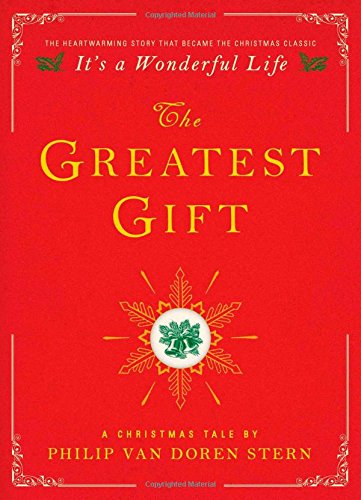
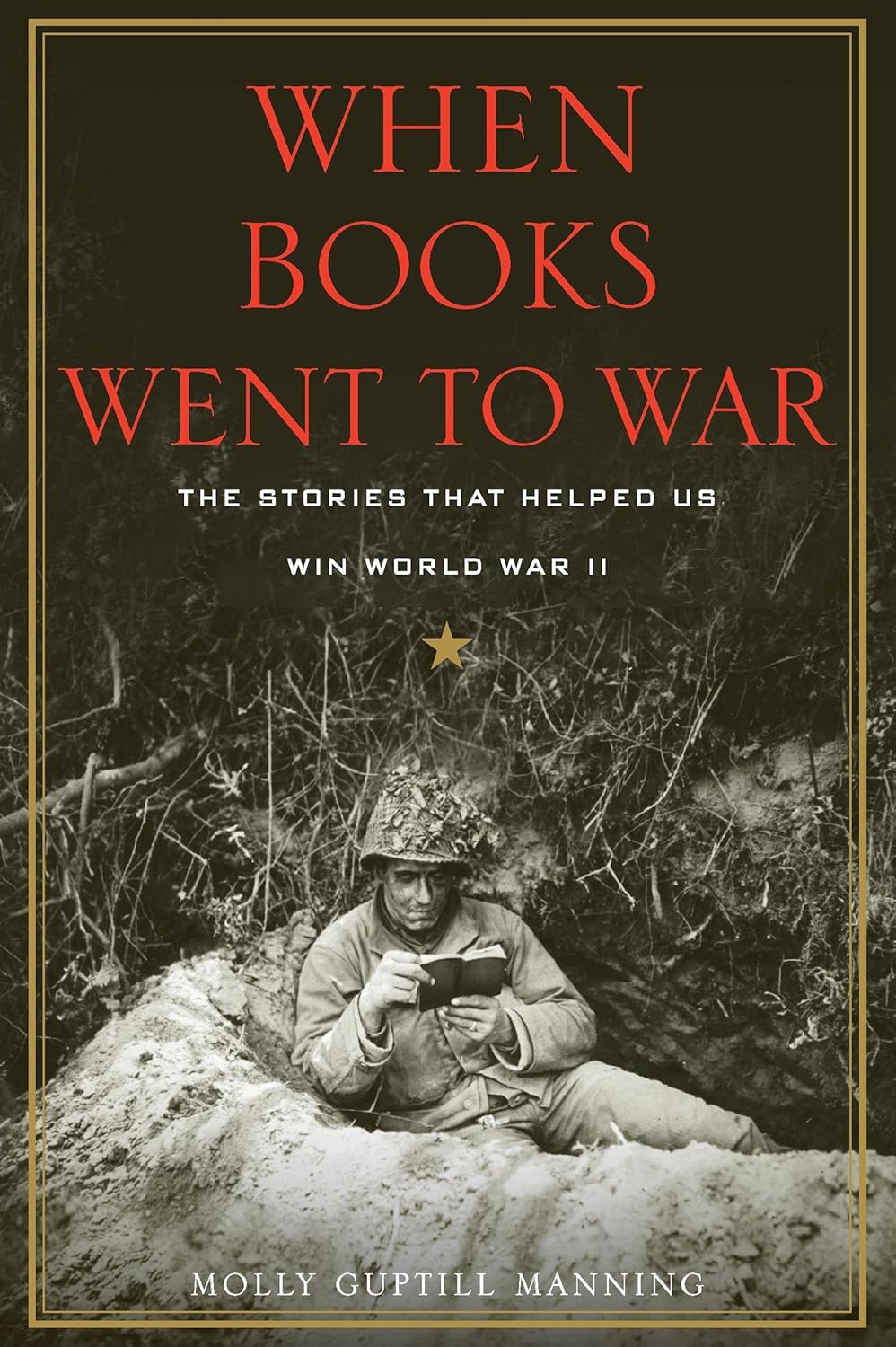
Browsing the new fiction table at the bookstore yesterday, I saw one of those slender, bright red books that seem to proliferate at the holidays. Normally, I barely notice these books that appear to exist solely as desperation gifts. This one was The Greatest Gift: A Christmas Tale. But it was the author's name that caught my eye. Philip Van Doren Stern was a major figure in the book I'd recently finished. In When Books Went to War: The Stories That Helped Us Win World War II, a terrific book about the program that sent millions of pocket-sized paperbacks to Americans fighting overseas,  Philip Van Doren Stern was a major character.  As the general manager of The Armed Services Editions, he helped select which titles would be reformatted for military use, edited and anthologized some editions, and oversaw the entire project.


The Greatest Gift is only 64 pages long, and half of
those 64 pages are an afterword by Stern's daughter, Marguerite Stern Robinson. She describes how her father wrote the story in 1939. His agent tried to place it in one of the many magazines that published fiction at the time, but was not successful. She told Stern that no one was buying fantasy stories these days. Finally in 1945, Stern self published 200 copies of the story and sent them to his friends and family, along with that year's Christmas cards. Frank Capra saw it and immediately wanted to make a movie of it.

Capra, who had interrupted his successful career as a Hollywood director to join the Army, had spent the war making propaganda films. He was at loose ends on his return to civilian life, as so many returning soldiers were, and making a film that recalled the pre-war days seemed just the ticket. But it was not a hit with audiences, who overwhelmingly preferred William Wyler's movie, The Best Years of Our Lives, which was released at the same time as It's a Wonderful Life. Wyler, also a returning war veteran, tapped into what audiences wanted, with a story of three men who were having difficulty transitioning to civilian life.


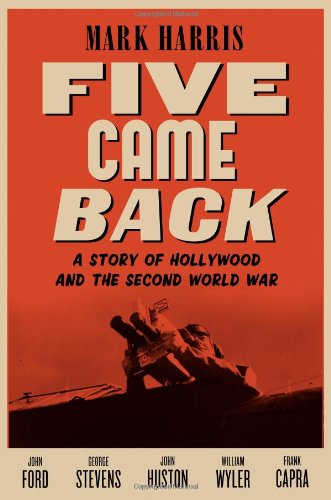
Capra and Wyler are among the five directors that Mark Harris has written about in his book, Five Came Back: A Story of Hollywood and the Second World War. Five Came Back is a detailed and often dramatic look at how five civilians, from different backgrounds and generations, adjusted to war, and then adjusted to peace when they came back to a very different America. Either Five Came Back or When Books Went to War would be a great gift for history fans.

As for that scene in It's a Wonderful Life at the library, it turns out that in the original short story, George's wife, Mary, was not destined to become an old maid librarian (horrors) if George had never been born -- she simply married someone else.


The Christmas Gift: A Christmas Tale
by Philip Van Doren Stern
Simon & Schuster, 2014

When Books Went to War: The Stories That Helped Us Win World War II
by Molly Guptill Manning
Houghton Mifflin Harcourt
on sale December 2, 2014

Five Came Back: A Story of Hollywood and the Second World War
by Mark Harris
Penguin Press, 2014 


~~

Tuesday, October 28, 2014

MUSEday Tuesday: Just My Type … Yours, Too?

(advance review copy courtesy Amazon Vine program)


Whether you are a fan of typography, history or a well-turned phrase, this novel rooted in historical research will grip you tight until you finish, and linger long afterward.


GUTENBERG'S APPRENTICE by Alix Christie 2014 US book jacket
U.S. book jacket
Gutenberg's Apprentice is grand and sprawling in all the right ways. Alix Christie demythologizes the icon we know as Gutenberg and humanizes him with a portrayal of a gifted, driven, high-strung, imperfect, visionary man. Receiving almost equal billing is Peter Schoeffer, a young man who becomes Gutenberg's apprentice.


Characters, setting, dialog, and pacing all are competent and keep a story this vast moving without getting muddled. 

However, where this book excels is Christie's adept descriptions of minute details, such as the crafting of the punches, and the casting of pieces of type. She comes by this knowledge not only academically but with ink under her fingernails. She apprenticed beginning at age 16 with master letterpress printers and as an adult, as she puts it, "kept a hand in the 'darkest art.'" It is fitting that someone with ink in her veins found documentation of the other key figures involved in Gutenberg's mighty achievement, and recognized that this was a story worth researching and telling.
GUTENBERG'S APPRENTICE by Alix Christie 2014 UK book jacket
UK book jacket

Any top-notch historical biographer could have done a serviceable job describing the years of intrigue, perseverance, and privation that went into the development of movable, metal type. It is our good fortune that the person who unearthed the rich additional information surrounding its birth was someone with ink in her blood.

The resulting tale is by turns luminous, sweaty, funny, and bittersweet. Pick it up on a Friday evening and you will be lucky to return to the 21st century before Sunday. And be warned, once you do, you will fire up your computer or mobile device and lose several more hours while you locate additional information about some of the people in the book and additional images from the time. (Saying any more would tread too close to being a spoiler, but be assured there are rich library resources available. If you'd like a hint, drop me a note in the comments.)


And now for the MUSEday Tuesday question:

I was surprised to find that this book has been published with two very different cover designs. The one on the left is the U.S. version; the one on the right is what readers in the UK are seeing. 

Which one is your favorite, and why? 


____________________________________
GUTENBERG'S APPRENTICE: A NOVEL
by Alix Christie
HarperCollins
Sept. 23, 2013


(U.S. and UK cover images courtesy author's website)


Friday, October 24, 2014

'The Past is Never Dead'

The Great New Orleans Kidnapping Case

Front Cover: THE GREAT NEW ORLEANS KIDNAPPING CASE
What comes to mind when you think of the Southern U.S. in the early 1870s? If you’re like me, you probably have to scramble to come up with an answer. Filling this void is one of two reasons to pick up Michael Ross’s The Great New Orleans Kidnapping Case, which includes data about the South during Reconstruction. The other reason is that this book chronicles a mystery, which is all the more fascinating because it is true.

In the afterword to this absolutely gripping book, Ross describes several of the coincidences that brought him to the largely forgotten story of the kidnapping of a New Orleans toddler in June 1870 that caught the attention of a nation, as did the subsequent manhunt and trial.

Ross was reading the column-inches of New Orleans newspapers published in 1870 in search of coverage about attempts to obstruct postwar Reconstruction efforts when he was hooked by the mention of police officers arresting and questioning practitioners of voodoo.

It is our good fortune that Ross is such a thorough researcher, and that he didn't simply gather some notes on what became known as the Digby case and set them aside for some indeterminate future follow-up.

Instead, Ross combed contemporaneous newspapers and conducted other research, and produced what he calls a micro-history. It is that, of course, and by dint of the generous footnotes and careful delineation of the New Orleans of 1870, obviously an academically sound tracing of the events of the case, as well as the historical, economic, societal, and political factors that contributed to making these events possible only at that particular time and place.

The Great New Orleans Kidnapping Case is gripping, captivating, and evocative of a time none of us will ever know. Somehow, though, Ross has managed to stitch ephemera and minutia onto a solid, supportive backing of context. These are real people, largely forgotten by succeeding generations, who occupied headlines around the country for a brief moment in time.


Indeed, as Ross points out, fellow author William Faulkner's words about another time and place are equally fitting for New Orleans: "The past is never dead. It's not even past." This book earns my highest recommendation for your bookshelf or that of a fellow history buff.

________________________________________
THE GREAT NEW ORLEANS KIDNAPPING CASE:
Race, Law and Justice in the Reconstruction Era
by Michael A. Ross
Oxford University Press
Oct. 14, 2014

(ARC courtesy of Amazon Vine program; cover image courtesy Oxford University Press.)