Showing posts with label Dunyazad. Show all posts

Monday, January 12, 2015

The Martian: In the voice of a snarky scientist

Note: I received a free copy of this book from Blogging for Books, in exchange for an honest review.

I’ve been hearing lots of good things about this book, so I was happy to accept a review copy. Until I realized that there were already more than 5000 reviews on Amazon, and I needed to think of something new to add to the conversation.

Let me start by saying that I wasn’t at all surprised when this book won a GoodReads Choice Award. It offers a compelling story of an astronaut left for dead on Mars, and his struggles for survival. The Martian includes some of the most exciting passages that I’ve read in a long time. It’s not all perfect—especially at the beginning, when I thought the whole book might be from the perspective of one character with no human interaction, I was a little bit worried, but that worry dissipated when we did eventually get to see the reaction of people back on Earth. No matter how compelling the protagonist is, other characters are important. 

But rather than giving a detailed survey of the book’s pros and cons, I want to focus on one aspect that I found particularly striking: the language. The vast majority of the book consists of log entries from the stranded astronaut, and their tone and style are unlike any I’ve encountered in a book before. The writing is much more casual and contemporary, basically what I would expect to find in a blog or livejournal, or in regular conversations with my friends. I actually think this is a very good thing; it fits the character perfectly, and his constant snarky remarks made in a normal tone of voice make it much easier to relate to this brilliant scientist.

Some examples, beginning with the first line of the book:

“I’m pretty much fucked.”

“I’ll lose half a liter of water per day to breathing until the humidity in the Hab reaches its maximum and water starts condensing on every surface. Then I’ll be licking the walls. Yay.”

“The guy just plain owned that landing.”

“There’ll be a lot of H20 at the end, but I’ll be too dead to appreciate it.”

“Once I got home, I sulked for a while. All my brilliant plans foiled by thermodynamics. Damn you, Entropy!”

I’ve seen other reviews complaining about the tone, describing it as childish or otherwise unliterary.
And maybe it is childish, but it actually seems perfectly natural to me, and I’m almost 30. This is the way people actually communicate, and it was somehow both surprising and satisfying to see it reflected so well in a book. I want to emphasize that this isn’t text-speak, just a slightly less formal register of English. You would not find expressions like “pretty much”, “fucked”, “yay”, “owned” (in that sense), “too dead”, or “Damn you, [inanimate noun]!” in formal writing.

It’s not that I’ve never seen casual language in a book before, but I’ve never found that the language was so familiar. I guess this is the casual language of educated nerds in their 20s or 30s. It’s not the casual language of valley girls, or the uneducated, or whatever other non-standard language normally appears in books. It’s non-standard in a smart, self-conscious way.

I also think the light tone was absolutely necessary in a book that otherwise includes a lot of logistical calculations and science. I don’t normally read hard science fiction, and in some ways this was harder than I’d like. The casual snarkiness is what made the book readable, and even then I was happy when we sometimes moved away from Mark Watney’s perspective to see the responses of people back on Earth.

Andy Weir has done a lot of interesting things with this book. I realized it’s been a long time since I read a “classic” science fiction novel about space travel, possibly because NASA abandoned its space program a few years ago, so it felt fresh enough just to see a modern take on the issue. Then there’s the matter of language, which again made the book feel very fresh and unique, while also seeming completely natural. Readers who are very opposed to hard science may want to look elsewhere, but if you have a science background yourself, even one that you’ve since abandoned, you’ll probably find a lot to like here. This is a contemporary novel with a very relatable protagonist, who may be a brilliant scientist but also feels completely like one of us. I’ll be happy to read anything else that Weir writes in the future.

Wednesday, November 12, 2014

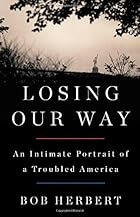
America in Decline: A very readable but bleak portrait


Author: Bob Herbert
Publisher: Doubleday, 10/7/14

Note: I received a free review copy of this book from Amazon Vine.


I started this book eagerly and tore through the first half. Herbert paints a powerful picture of various ways in which America has gotten off course, and he makes his account very readable by including the stories of individuals to support each chapter. So we don’t just hear about how infrastructure is crumbling and needs a huge injection of cash to get up to an acceptable standard, we also hear about the personal experience of a woman who survived the collapse of the I-35 bridge in Minneapolis. This makes for a very compelling narrative.

Everything was going well until just over halfway. I really enjoyed Herbert’s first chapter on education, where he vividly describes the devastation wrought by draconian budget cuts. So it came as a surprise to me when he started the following chapter with the claim that American education is actually perfectly fine. Test results showing that American students lag behind others have nothing to do with the quality American public education, he says, but are instead just a result of the fact that America has more poor students than other countries. Poor students tend to do poorly in school too. It follows that there’s no point in trying to improve the quality of education; we have to address poverty first.

I understand why he’s saying this. He’s basically repeating the position of Diane Ravitch, an education advocate who deeply opposes the current focus on charter schools and standardized testing. I’m actually very sympathetic to this position, at least in part: I do think that excessive high-stakes testing is destructive and results in teaching to the test without actually improving learning outcomes, and I do think that charter school policies, which somehow allow charter schools to get rid of disadvantaged students so that their overall scores look higher, are extremely problematic. I believe that reducing poverty is important too. But I have no idea how this critique of certain aspects of educational reform leads to the conclusion that there’s no room for improving education at all, so we shouldn’t even try. Surely Herbert’s previous chapter, about the problems with funding cuts, implies that education would be improved by restoring funding, for one thing. This seemed to be a case where Herbert’s position was established beforehand, and he was just going to stick to it, without actually providing careful argumentation to support his case.

The situation got even worse in a later chapter, when he turned to a critique of online schooling. I’m sure most people would agree that online schooling isn’t an ideal learning environment for most children, since there’s a lot of value in face-to-face interaction, even beyond the educational. But I thought Herbert’s arguments against it were terrible: he cites test scores showing that students don’t do as well at online schools, and then mentions the defense given by an executive of one of these online schools: the students who choose online schooling are generally not the best and brightest; they tend to be lagging behind even before they start, etc. In other words, it’s an issue of adverse selection bias.

Somehow, Herbert misses the fact that this is the exact same argument that he himself gave in support of American public schools: he said that poor test results don’t reflect on the quality of teaching, but are just the result of a comparatively disadvantaged student body. When the argument supports his position (American schools are okay), then it’s valid; when the argument supports another position (online schools are okay), then it’s invalid. This is extremely shoddy reasoning. Herbert doesn’t even bother to refute the argument made by the proponent of online schools, instead trying to attack his credibility by pointing out that he earns $5 million per year as the CEO of this online schooling company. (This is another theme running through his book: successful money-makers are generally bad. Again, I agree that the distribution of wealth needs to be drastically reformed, but I don’t think highlighting the wealth of an individual serves as a refutation of that person’s ideas.)

The strange thing is that I tend to fall on the same side as Herbert on most issues. I’d like to see a more equal society, with more spending on infrastructure and less on war; I’d like to see students receiving a good public education, in an atmosphere free from antagonism and high-stakes testing, rather than studying at for-profit online schools. But I’d also like to read a book with solid argumentation, not one that relies on the assumption of a sympathetic reader.

This is a book about black and white, right and wrong. There’s no room for nuance in Herbert’s bleak portrait of America in decline. This is all well and good, up to a point. You can easily find yourself reading along in agreement, nodding at Herbert’s arguments and lamenting with him the decline of the nation. But it only takes one area of disagreement to start questioning the whole edifice. In my case, it was his blithe argument that America’s schools are just fine, and the only way to improve their results is to pull more students out of poverty.

I’m sorry, but I’ve been the smart kid in a public education system that caters to the lowest common denominator. I’ve graduated high school with an A+ average and found that I wasn’t prepared for my university math classes, where the top students had attended private schools or came from other countries. I fully believe in fighting poverty, but poverty isn’t the only problem with the American education system. Real-life issues just aren’t that simple. There isn’t one “solution” that will fix American education once and for all, and by promoting that perspective (“my way or the highway”), Herbert is just adding to the toxic atmosphere surrounding educational reform. I’d much rather see support for multiple evidence-based improvements.

After reading this book, I still believe that money should be spent on infrastructure rather than war, that cuts to education funding are bad and out-of-control corporate lobbying is worse. Basically, this book has reinforced the ideas that I had going in. It did also make me much more aware about issues involving the military, like the use of more powerful explosives that result in multiple amputations and astronomically higher costs for veteran health care. But for the most part, this isn’t a book that you read to be informed or challenged. It’s a book that you read to reaffirm your existing perspective, and it does that pretty well, up to a point.

But even if you do agree with everything that Herbert says, you may occasionally find that you need to put the book down just because it’s so bleak. I could only spend so much time reading about how horrible everything is before I needed to take a break. I was particularly struck by the contrast to Nicholas Kristof and Sheryl WuDunn’s recent book A Path Appears, which I also read recently and which takes a very optimistic evidence-based approach to making a difference in the world. Herbert does end on a note that’s not quite despair, though I wouldn’t really call it optimism: he says that if citizens as a whole decide that the status quo is unacceptable, then change can eventually come about, as it did with emancipation, the suffrage movement, and civil rights. But the details of how to get there aren’t quite clear. Unlike Kristof and WuDunn’s encouraging presentation of multiple paths to a better world, Herbert’s book lives up to its title in conveying a sense of an America that’s hopelessly lost.

Saturday, November 1, 2014

Customer Service: Amazon vs. Barnes & Noble

Amazon has long been known for their great customer service, so I’ve generally been happy to shop there. But recently, they’ve been putting the customer second in their battle with Hachette by, among other things, refusing to list pre-release books from that publisher on their website (they are available eventually, but they arrive slowly and aren’t discounted). This has been a bit disconcerting because Amazon has always been my go-to place for book information as well as purchasing, and now they’re pretending that certain books just don’t exist.

The result is that I’ve had to turn to BarnesandNoble.com instead. I do shop at physical Barnes & Noble locations and have a membership there, but I’ve generally restricted my online book purchases to Amazon. This time was different: I was looking for Paolo Bacigalupi’s new book, The Doubt Factory, and Amazon was pretending that it didn’t exist, so I couldn’t even add it to my wishlist. Instead, I pre-ordered from B&N, thinking all the while that this would backfire against Amazon. Why would they deliberately drive their customers to other bookstores? Once I’d become accustomed to ordering from BarnesandNoble.com, I might well keep doing it in the future.

Fast forward to October 14, the book’s release date. I got an email from Barnes & Noble saying that the book had been shipped and would arrive soon. A week later, I wondered what had become of it, and when I looked at the tracking information it claimed to have been delivered on October 16.

Of course, it’s not necessarily Barnes & Noble’s fault that the package went missing. I’m perfectly willing to believe that it was just bad luck that I had an issue with my very first order from them, while I generally receive at least a couple of packages from Amazon every week without problem. What really matters is how issues are resolved.

I contacted Barnes & Noble, and was initially very satisfied with the response. They got back to me almost immediately via email, offering to either refund my money or send a new copy of the book. However, they didn’t make it very clear how I should express my preference. The final line of the email read as follows:

If you want to be immediately assisted with your inquiry, we suggest that you contact us by phone or by chat, please call 1-800-THE-BOOK (1-800-843-2665). If you prefer to chat with us, please click on this link: www.bn.com/chatwithus”.

Did I need immediate assistance? I didn’t think the situation was particularly urgent, so I just responded to the email, saying that I’d like to receive a new copy of the book. This was on October 23.

Well, apparently “immediately assisted” meant “assisted at all”. After five days with no further response from them, no notification of a shipment, and no book, I responded again to the email and asked what the status of the replacement was. Their reply was a bit passive-aggressive, pointing out that they had sent an email asking for my preference, though they did apologize for the failed communication while refusing to take responsibility for it:

We would like to apologize if we had trouble receiving your response however, we sent an email to you asking for your preference with regard to this matter. Nevertheless, moving forward, we are more than happy to help you with your concern.

They went on to explain the situation with the previous shipment (they had checked, and it had claimed to be delivered on October 16)—which I had already gone over in my initial communication, embedded in the current email thread. They did go on to say that they were replacing the item and were requesting that the shipment be expedited so that I would receive it as soon as possible. They also said that they would update me about it by email.

This was three days ago, and I’ve received no further communication, much less a book. Meanwhile, the book is in stock at my local Barnes & Noble, and at four other B&N locations within a 5-mile radius. Their website also states that it’s available for same-day delivery in Manhattan, where I live. Supply and shipping speed are not the problems here. So I emailed them again today, asking them to escalate the situation to someone higher up, though I’m starting to despair of ever seeing the book.

Meanwhile, I can’t help contrasting this situation with the customer service that I’ve received at Amazon. I don’t think I’ve ever had an Amazon shipment go missing (though again, I attribute this to the luck of the post office more than anything else), but I’ve had occasional minor issues. Expensive books have come damaged on two or three occasions, and in one case a book didn’t arrive on the guaranteed two-day delivery date.

In the case of the damaged books, Amazon offered generous discounts, and processed them promptly, without hassle. In the case of the book that didn’t arrive on its scheduled delivery date, they sent out another copy overnight, so I ended up with two copies when the late shipment eventually arrived as well. Basically, everything has always been resolved not only satisfactorily, but with a maximum of speed and convenience.

Meanwhile, I’m still sitting in limbo with my one Barnes & Noble order, hoping I’ll eventually receive this readily-available book that was supposed to arrive on October 16.

I was so sure that Amazon would lose out by forcing us to shop for certain books somewhere else. I thought I’d see that Barnes & Noble was just as effective, and end up comparison shopping with every purchase. Needless to say, that hasn’t been the case. When Amazon drove me to shop at B&N, it just reinforced my intention to shop at Amazon as much as possible.

Tuesday, October 28, 2014

Michel Faber: From Victorian prostitutes to Christian missionaries in space

(Note: I received a free review copy of this book from Amazon Vine)

I read this book more than a month ago, but I'm posting my review today in honour of its official release date. I'm excited to see what everyone else thinks of the book. I suspect that you'll either love it or hate it, and I'm definitely on the love side. I was very sad to see that, following the death of his wife, Faber plans to stop writing novels.


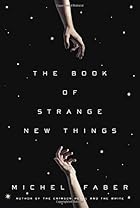
Book Review: The Book of Strange New Things by Michel Faber

I really enjoyed Faber's earlier novel The Crimson Petal and the White so I was excited to see that he'd written another one. The premise was also intriguing: a Christian missionary travels to another planet to work with the native population there, while receiving updates from his wife about the increasingly apocalyptic conditions back home on earth. The book interweaves the story of Peter's missionary work among the aliens with the story of his increasingly strained relationship with his wife, which suffers from the vast distance between them and the enormous difference in their circumstances.


There are some themes here that I don't normally find very compelling, namely issues of faith and marital difficulties. But I found myself completely absorbed in Faber's creation, tearing through this hefty volume in a matter of days. The characters all felt very real to me, with vivid personalities and abundant flaws. There were times when I would have liked more detail about certain events, particularly Peter's early days among the natives, but ultimately the book as a whole comes together very well. Various mysteries are satisfactorily resolved. The only aspect of the story that I found somewhat unsatisfying was its open-endedness; there are hints about how everything may turn out, but we don't actually see it all through to the end. I can understand why Faber stopped where he did; important decisions have been made and events have been put in motion, so that it might actually have been anticlimactic to pursue each thread down to its final resolution. I just wasn't quite ready to leave this story yet, which might speak as much to its power as to anything else.

A word of warning: despite the central role of faith, this is definitely not what I would classify as "Christian fiction". It opens with a sex scene and contains plenty of profanity, along with descriptions of bodily functions, masturbation, etc. This is the sort of content that could have come across as gratuitous, but instead it adds an element of gritty realism. The religious message is also not entirely unwavering, which I appreciated as a non-Christian reader.

I'd like to say more about the plot and the various issues that arise in the course of Peter's mission, but I think it's best to approach the story without too much prior information and just allow yourself to get caught up in the flow. There are plenty of surprising elements here whose impact might be diminished by reading about them beforehand. Peter sets off on a journey into the unknown, and I'm very glad that I had an opportunity to travel along with him. I just wish I could do a better job of explaining I liked this book so much; it's a powerful novel whose impact I can't seem to express in words. Reading it was a fully immersive experience.

Tuesday, October 21, 2014

Teaching English in North Korea

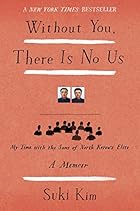
bookcover of WITHOUT YOU, THERE IS NO US by Suki Kim
Book Review: Without You, There Is No Us by Suki Kim

(Note: I received a free copy of this book in exchange for an honest review.)

Suki Kim was given an extraordinary opportunity for someone with a South Korean and American upbringing: she spent four or five months teaching English at a university in North Korea, where her students were the children of the country's elite. The university was run by Christian missionaries, and was apparently permitted because it was providing English education free of charge, though the teachers were not allowed to talk about religion with the students. Kim herself was not religious at all, but basically went as an undercover journalist, secretly taking notes for use in the writing of this book.

I've read other books about North Korea, and this isn't the best one; I'd recommend Nothing to Envy or Escape from Camp 14 as a starting point instead. But Kim's book stands out in the access that she had to the country's elite youth, and in the potential impact that she could have made. Although her job was to teach English, using pre-approved textbooks and with all of her lesson plans subjected to scrutiny, she also wanted to gradually make her students aware of what they were missing in their very limited existence, cut off from all access to the outside world. She made sure that her MacBook and Kindle were frequently visible, and impressed students with her ability to find answers to questions on the internet, which they themselves were not permitted to use. She taught them to write argumentative essays, backing up their reasoning with evidence, a completely foreign concept in a world build around unthinking acceptance of official accounts. She came to love her students, and found them gradually opening up to her.


But Kim generally comes off as frustrated with her limited progress, not appreciating the time required to come to terms with a completely different worldview. When her students constantly lie to cover for each other's absences, in a world where disobedience could mean death, she wonders whether they just don't have a sense of right or wrong. When she pushes too hard in presenting new ways of thinking, leading the students to take refuge in their familiar nationalist stories about how North Korea is the best place in the world, she laments that "nothing could break through their belligerent isolation". Yet I thought that the students showed a remarkable interest in learning about the world, considering all the constraints placed on their thought and expression throughout their lives. They don't suddenly turn into Westerners, but Kim recounts plenty of telling incidents that reveal a steadily increasing awareness.


I feel like the real problem with this book is that it stopped too soon. So much time had to be spent gaining the trust and respect of the students, and gradually opening them up to the possibility of new ideas, but Kim left after less than six months to return to North America, and didn't really have time to reap the fruits of her labour. I understand that North Korea is a brutal place to live in many ways, both because of the lack of freedom and constant surveillance, and because of the lack of basic comforts like reliable electricity and heat, and Kim constantly reports that she found it depressing and difficult to tolerate. Still, I can't help feeling that in some ways this was a wasted opportunity, and I wonder how much more of a difference she could have made--not just to her students, but to the country and even the world--if she had stayed there for a whole year, steadily building on the foundation that she had laid. She says in the acknowledgements that she had to publish this book, to tell the truth about North Korea, because she cares deeply about the country and feels an obligation to improve the lives of North Koreans. But I don't really see how this book, for outsiders, will have a deep impact, certainly not compared to the impact of daily interaction with the country's future elites at a time when they are still open to new possibilities. This is still an interesting memoir, but I personally felt like it ended almost before it had begun. I would have liked to see more about what the future held for these students with their increasing awareness that life could be different.