Showing posts with label book review. Show all posts

Sunday, January 24, 2016

"The Watcher in the Wall" by Owen Laukkanen is a more personal entry in the Stevens & Windermere series

This book -- which comes out in March 2016 -- is the 5th book in the Stevens and Windermere series.  Although the story stands alone with some brief references to the case from the previous book in the series, I wouldn't recommend reading it without reading at least the first book in the series.  And really I think you should read at least the first couple books because you need to get the history of these characters and why they are working together and what the relationships are among the major characters.  You would still have a really interesting book to read but would lose a lot of the background.

"Watcher" starts out on a very different note from the stories earlier books in the series which all begin with a violent crime that has a Minnesota connection and in which the FBI gets involved.  This story starts out more quiet and sad -- with a bullied teen committing suicide.  Stevens gets involved because the teen was his daughter's classmate and Windermere has her own personal connection and it hits her hard.  For the first 100 pages, it looked like this book was going to be a dramatic change from the past books where the duo criss-crosses the United States hunting down the bad guys with some dramatic action scenes.  But never fear --  even though the beginning of the book is heavy on the touchy feely and on computer research, it doesn't stay passive for long.

If you are a fan of the series.for the action, don't be put off by what seems to be a departure from the usual formula.  You will get all the action you expect as the investigation reveals that there is more to this case than depressed and suicidal high school students.  I am not going to give away any spoilers, but will let you know that the action heats up in a big way.

But even when the action heats up, the personal aspect to the book stays with you.  One of the hardest parts of the book, both for one of the characters and also for me as a reader, is the description of how so many students laugh along with the bullies, not because they want to be mean to the target but to fit in themselves or out of a desire to not become a target of the bully themselves.  I have been out of high school for a very long time but one of my classmates recently shared on Facebook how much her bullying in high school negatively affected her life.  And I feel ashamed that I was too wrapped up with my own desire to fit in and be liked to notice what she was going through.

In the acknowledgements at the end, the author talks about his own struggles with depression and suicidal thoughts and encourages bullied or suicidal teens to talk to someone.  He even offers up himself.  I hope someone who needs it takes him up on the offer.

For the rest of us, enjoy another exciting Stevens & Windermere thriller!

Sunday, December 27, 2015

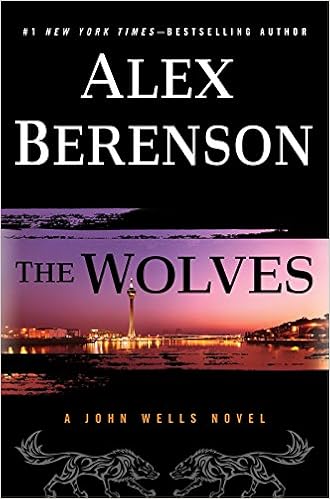
"The Wolves" by Alex Berenson takes the character John Wells to a darker place and I didn't care for it

This is Book #10 in the author's John Wells series of spy thrillers.  John Wells is a CIA agent (and later a deniable independent contractor for the CIA) who has spent most of his career infiltrating terrorist cells in Afghanistan and similar countries.  Along the way he converted to Islam -- his religious beliefs and practices form a distinct part of his character.  And like most "lone wolf" spy novel protagonists, he has a complicated personal and romantic life.

I haven't read all of the John Wells books but of the several I have read, this one was my least favorite.  The storyline follows directly from the previous book in the series, "Twelve Days," so you probably should read that book first to understand the context of how the characters relate to each other.

This book is almost the complete opposite of Twelve Days in tone and pace.  The pace in Twelve Days was frantic with Wells going from country to country -- Europe, Russian, Middle East, Africa -- in a very short period of time to try to keep the United States from being tricked into entering a war with Iran.  And it was heavy on the violence as well.  This book starts when events have had a little time to calm down and because there is not a deadline, the action moves more slowly from place to place and even within a set location.  The level of violence is significantly lower in this book, as is the degree to which Wells's physical ability to carry out his mission and escape from tight situations stretches the bounds of believability.  For the most part, Wells doesn't pull off physically improbable stunts.

However, instead of being about saving the United States, the story in this book is all about revenge.  I didn't like that part of the book -- it made the character of John Wells even darker than he has been throughout the series.

One interesting part was how much time the reader spends inside the heads of the bad guys.  They aren't just caricatures but fully formed people who justify their own actions.

If you like this series and this character, you most likely will enjoy this book as well.  I didn't care for the particular focus of this book, but it was still a fairly entertaining read.  Even though this book was merely OK for me 3 stars out of 5), I would still read the next book in the series.

I received an ARC free from the Amazon Vine program in exchange for a review.

Saturday, December 26, 2015

"Real Tigers (Slough House)" by Mick Herron is not the spy book I was expecting but definitely worth reading


This was not at all the book I was expecting from the blurb on the back of the book. I had not read any of the other Slough House books and always associate spy novels with nonstop action and page-turning speed. So I was a bit taken aback when the book started out fairly slow and "wordy" (by which I mean there are a lot of full paragraphs and not just the spare action and dialogue oriented prose you might see in an American thriller). Clearly this was not going to be a page-turner and I was tired and just wanted some mindless escapism so I nearly quit reading but was convinced to keep going and am glad I did.

The Slow Horses (which I only just now realize is a play on words of the building where they "work") are MI5 agents who have been pulled from official duty for various screw-ups and given make-work assignments designed to make them quit. These folks are not James Bond or any of the great fictional British spies. They are not especially heroic or competent and they don't appear to like each other very much. A lot of the wordy part at the beginning of the book gives the reader insight into these characters and what messes they have made of their lives. It can be slow reading, especially if you are expecting a spy thriller. If you get tempted to stop reading -- just keep going. There is a point to what you are reading and things will eventually start moving.

Just about the time you think the action is really going to start, you get more background but keep with it. This is definitely a book written by someone with a degree in English, not the typical American thriller that is often a mental movie script in novel form. It is much more character driven with a fairly involved plot. Sit back and enjoy the writing.  One of the benefits of so much of the book being about the characters and not just solid action is that it is not critical to have read earlier books in the series to be able to understand and enjoy this one.

I don't want to give out any plot details because it would spoil the surprises the author has built into the story. Right around page 114, I realized what kind of spy book this was going to be -- and it was nothing like I expected. For the rest of the book there were plots and counter-plots until you wonder who the good guys and bad guys really are and who is going to come out on top in the end. And I finally got more of the action I was originally expecting, even though the Slow Horses are not your typical spies.  By the time I finished, I was really glad I had kept reading even though it wasn't the book I had expected. This is definitely a thinking person's spy book -- a literary spy thriller. If all you want is page-turning action, this might not be the book for you. But I still recommend it because it will keep you on your toes.

I received an Advance Readers Copy of this book through the Amazon Vine program in exchange for a review.

Tuesday, February 3, 2015

A Stunning Voice in SF

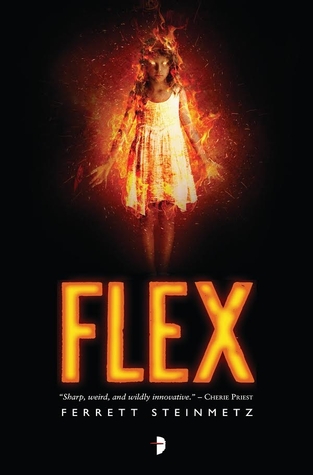
Title:  Flex
Author:  Ferrett Steinmetz
Publisher:  Angry Robot

Flex is a wonder drug. 

It flexes the world into whatever your mind can imagine.  Are you a gamer?  Gamermancy will give you life bars and power ups during a gun battle.  Is your perfect world one of lists and paperwork to keep everything organized?  Papermancy will allow anything to happen simply by filling out a form.  Literally everything you can imagine can become reality.

For a price.

With Flex comes Flux.  It's karmic law.  Whatever good you create must be offset by something bad.  It could be a simple as your house burning down.  Or as brutal as hundreds of dead strangers.  It depends on how big the magic you created was.

Paul Tsabo was a cop, but is now simply a bureaucrat.  There are three things he knows with all the certainty in his heart.

1)  He loves his daughter.

2)  He resents his ex-wife.

3)  The only good 'mancer is a dead one.  And if you can't kill them, at least wipe their brains clean.

His world makes perfect sense…until an act of 'mancy disfigures and almost kills his daughter and wakes his own 'mancy.  And whether or not 'mancy is evil, Paul Tsabo is going to use it to find and destroy the 'mancer who hurt his little girl - even if it kills him.

The book is billed as urban fantasy.  If you're like me, that term has been corrupted to mean books featuring girls wearing leather and killing and courting sexy demons.  Ferrett Steinmetz has taken the term Urban Fantasy back!

This is gritty, violent, and sharp.  The magic is both fantastical and yet grounded in reality.  The book is unflinching.

Paul Tsabo is like something straight out of a magical Death Wish or Dirty Harry.  He's a wounded man who turns his need for revenge into something bigger and even more important.  And as for the women in the book, if they do wear leather, it's more because they took it off of your broken corpse than any demon killing dominatrix fantasies.

This is original, strong SF and I can't wait to see what the author does next!


*ARC Provided by Netgalley for review purposes.

Thursday, January 22, 2015

I Didn't Want to Know These Things

Title:  Blood of the Tiger Author: J.A. Mills
Title:  Blood of the Tiger
Author: J.A. Mills
Publisher: Beacon Press


I feel like the proverbial ostrich, hiding its head in the sand. On an intellectual level, I knew, of course, that people all over the world kill many of our endangered species for some pitiful reasons. But until I read this, I don't think I truly knew how widespread it is, how 'normal' it is, and how much of it even happens here in the U.S.

J.A. Mills forced my head out of the sand.

Now, I don't want to worry you. The book isn't written like some fire and brimstone religious sermon. It doesn't club you over the head with atrocities and try to make you feel like the lowest form of humanity for not being aware of this before.

In fact, the writing style is engaging, honest, personable, and incredibly readable. Is it a plea for humans to have a little more humanity? Absolutely. But it's done in such a way that you feel energized and hopeful instead of guilty and hopeless.

The author is fully aware of her own prejudices. I appreciated the fact that she tells you that some of what she once thought were ignorant ideas about the health benefits of some animal parts actually have some basis in science. No, it still doesn't excuse cruelty and atrocity, but it was refreshing that she admits her own ignorance. You also witness her journey from the kind of activist who wants to scream injustices to the world, to a true advocate who still wishes to change the world, but does so with education, understanding, and heart.

The book is an adventure story that presents important truths, a ton of hope, and just may light a fire for change.


*ARC Provided by Amazon Vine Program.

Monday, January 12, 2015

The Martian: In the voice of a snarky scientist

Note: I received a free copy of this book from Blogging for Books, in exchange for an honest review.

I’ve been hearing lots of good things about this book, so I was happy to accept a review copy. Until I realized that there were already more than 5000 reviews on Amazon, and I needed to think of something new to add to the conversation.

Let me start by saying that I wasn’t at all surprised when this book won a GoodReads Choice Award. It offers a compelling story of an astronaut left for dead on Mars, and his struggles for survival. The Martian includes some of the most exciting passages that I’ve read in a long time. It’s not all perfect—especially at the beginning, when I thought the whole book might be from the perspective of one character with no human interaction, I was a little bit worried, but that worry dissipated when we did eventually get to see the reaction of people back on Earth. No matter how compelling the protagonist is, other characters are important. 

But rather than giving a detailed survey of the book’s pros and cons, I want to focus on one aspect that I found particularly striking: the language. The vast majority of the book consists of log entries from the stranded astronaut, and their tone and style are unlike any I’ve encountered in a book before. The writing is much more casual and contemporary, basically what I would expect to find in a blog or livejournal, or in regular conversations with my friends. I actually think this is a very good thing; it fits the character perfectly, and his constant snarky remarks made in a normal tone of voice make it much easier to relate to this brilliant scientist.

Some examples, beginning with the first line of the book:

“I’m pretty much fucked.”

“I’ll lose half a liter of water per day to breathing until the humidity in the Hab reaches its maximum and water starts condensing on every surface. Then I’ll be licking the walls. Yay.”

“The guy just plain owned that landing.”

“There’ll be a lot of H20 at the end, but I’ll be too dead to appreciate it.”

“Once I got home, I sulked for a while. All my brilliant plans foiled by thermodynamics. Damn you, Entropy!”

I’ve seen other reviews complaining about the tone, describing it as childish or otherwise unliterary.
And maybe it is childish, but it actually seems perfectly natural to me, and I’m almost 30. This is the way people actually communicate, and it was somehow both surprising and satisfying to see it reflected so well in a book. I want to emphasize that this isn’t text-speak, just a slightly less formal register of English. You would not find expressions like “pretty much”, “fucked”, “yay”, “owned” (in that sense), “too dead”, or “Damn you, [inanimate noun]!” in formal writing.

It’s not that I’ve never seen casual language in a book before, but I’ve never found that the language was so familiar. I guess this is the casual language of educated nerds in their 20s or 30s. It’s not the casual language of valley girls, or the uneducated, or whatever other non-standard language normally appears in books. It’s non-standard in a smart, self-conscious way.

I also think the light tone was absolutely necessary in a book that otherwise includes a lot of logistical calculations and science. I don’t normally read hard science fiction, and in some ways this was harder than I’d like. The casual snarkiness is what made the book readable, and even then I was happy when we sometimes moved away from Mark Watney’s perspective to see the responses of people back on Earth.

Andy Weir has done a lot of interesting things with this book. I realized it’s been a long time since I read a “classic” science fiction novel about space travel, possibly because NASA abandoned its space program a few years ago, so it felt fresh enough just to see a modern take on the issue. Then there’s the matter of language, which again made the book feel very fresh and unique, while also seeming completely natural. Readers who are very opposed to hard science may want to look elsewhere, but if you have a science background yourself, even one that you’ve since abandoned, you’ll probably find a lot to like here. This is a contemporary novel with a very relatable protagonist, who may be a brilliant scientist but also feels completely like one of us. I’ll be happy to read anything else that Weir writes in the future.


Sunday, December 7, 2014

A great holiday gift idea for younger children: "The Cat, The Dog, Little Red, The Exploding Eggs, the Wolf, and Grandma" by Diane and Christyan Fox

Two things make me love a children's book:  an offbeat sense of humor and the opportunity to use funny voices while reading it aloud.  This book succeeds on both counts and will amuse adults as much as -- perhaps even more than -- their children.  I'm not a big fan of the overly sweet and sincere types of children's books and this one just hit my funny bone.  I laughed out loud in the children's section of the library the first time I read it.  And book pusher that I am, I forced it onto a father who was there looking at books with his children.  As part of my evil plan to ensure that every child gets a book for the holiday season, I suggest this would make a delightful gift!

Although this book is ostensibly about Little Red Riding Hood, it is really about the two main characters:  Cat and Dog.  Cat is a bit of a superior know-it-all and Dog is an overly enthusiastic goofball. Cat is reading -- or trying to read -- the story of Little Red Riding Hood to the Dog.  But Dog loves stories about super heroes and super villains and exasperates Cat with his constant interruptions and questions. Nevertheless, Dog's recap of the story after Cat finally gets to the end makes a lot of sense!  The illustrations are simple but perfectly fit the story and the text is hilarious.

I wondered if children would find this book as funny as I did, so I loaned it to a co-worker for a weekend to see how her four-year-old daughter liked it.  They read it every night. Her daughter thought it was hilarious and had to tell her Grandpa about the exploding eggs and now my co-worker thinks she might have to buy it for Christmas.  I think that is an excellent idea!

Because Cat and Dog are such characters, this book gives great opportunities to pull out some funny voices when you read it aloud.  It really begs to be read with distinctly different voices for Cat and Dog -- preferably ones that fit their personalities in the book.  It will enhance the reading experience.  There is a lot of back and forth between the two characters and the Dog is constantly interrupting the Cat so the different voices will help clarify the conversational flow as you read aloud.  (And be really fun.)

I received a free copy of this book through the Amazon Vine program in exchange for my honest  review.


Thursday, December 4, 2014

Reconnaissance - When Sci-Fi Meets YA the Right Way

Reconnaissance (Paradise Reclaimed #2) by Aubrie Dionne

Title: Reconnaissance (Paradise Reclaimed #2)
Author: Aubrie Dionne
Publisher: Inkspell Publishing 4/5/13

Nova Williams has lost her one shot at Lieutenant hood and at love. Lieutenant Crophaven has promoted her rival, Andromeda, all because her lifemate, Sirius, sacrificed their mission to win back Andromeda’s love.

While sneaking out to prove Andromeda is a fake, Nova finds an alien ship hovering over their colony. Lieutenant Crophaven assigns her to a reconnaissance mission, giving her a second chance to redeem herself. Sirius must fly her and a research team to the vessel to decide if they are a threat. Thrown together with the lifemate that betrayed her, she battles with her own jealousy while her team battles for their lives.

Can she forgive Sirius in order to save her team and warn her colony?

********************

This was an amazing sequel. The story has a lot of classic science fiction elements paired with a great cast of main characters. Book one flows directly into book two with a shift in perspectives from Andromeda to Nova - rivals since school. There is a hint of a love triangle - but it dissolves very quickly and is more of a school age crush finally ending than anything.

Most of the story takes place on the alien ship that Nova has discovered hanging out nearby. These aliens are not nice creatures. They were written brilliantly and gave me the heebie-jeebies everytime that skittered (yes, they skitter) into a room or scene. There was quite a bit of suspense as Nova and Sirius explore the ship and I loved every word of it.

The romance was really on the back burner most of the time. I knew it was there hovering in the background waiting for the right time to pop up again. It was nice not having teenage love shoved in my face every few minutes. I would highly recommend this to any sci-fi YA lovers out there.

Saturday, November 15, 2014

"Woman With a Gun" by Phillip Margolin kept me up all night!

I am tired today and it is all Phillip Margolin's fault.  I started reading this book last night and expected to be able to put it aside to sleep, but I kept waking up and reading a little more until I finally gave up, stayed awake, and finished it.

This stand-alone novel is a very different style of mystery so if you are a fan of the author's series be prepared for a change.  Rather than one main character who the plot follows through the entire book, there are a couple of them and the plot is not linear.  In fact, it is not just one story but three interrelated stories that take place in 2015, 2005 and 2000, respectively. And the style is a little bit of legal thriller and a little bit of amateur sleuthing mystery.

The book starts in 2015 with Stacey Kim, an aspiring novelist in NYC who gets inspiration from a photograph at a museum and decides to get the facts about it as background research for her book. The 2005 storyline is about the murder investigation in which the photographer is a witness and the subject of the photo is a suspect.  The main character in that section is Jack Booth, an Oregon prosecutor brought to Palisades Heights to help the local DA with a high-profile murder investigation.  Jack has history with the photographer, which leads to the 2000 story when Jack was a young prosecutor.  Eventually the book returns to the present and all the story lines come together.

That all sounds more complicated than it is and the interrelated stories both keep the plot moving and give the reader insight into the characters' personalities and backgrounds.  (Interestingly, Stacey was the least interesting character to me because her story is all in the present and she lacked the depth of the other characters.)

I had an idea who the killer might be, but for most of the book it could have been almost any of the characters except Stacey.  The confession was a little abrupt and it seemed to me that the evidence that prompted it could have been explained away, but those are minor quibbles with a book that not only kept my interest but kept me awake and reading.  If you like smart mysteries, this one is for you.

In a case of art imitates life, the author got the inspiration for the book from a photograph -- and that photo is on the cover of the book.

I received a free ARC of this book from the Amazon Vine program in exchange for a review.

Wednesday, November 12, 2014

America in Decline: A very readable but bleak portrait


Author: Bob Herbert
Publisher: Doubleday, 10/7/14

Note: I received a free review copy of this book from Amazon Vine.


I started this book eagerly and tore through the first half. Herbert paints a powerful picture of various ways in which America has gotten off course, and he makes his account very readable by including the stories of individuals to support each chapter. So we don’t just hear about how infrastructure is crumbling and needs a huge injection of cash to get up to an acceptable standard, we also hear about the personal experience of a woman who survived the collapse of the I-35 bridge in Minneapolis. This makes for a very compelling narrative.

Everything was going well until just over halfway. I really enjoyed Herbert’s first chapter on education, where he vividly describes the devastation wrought by draconian budget cuts. So it came as a surprise to me when he started the following chapter with the claim that American education is actually perfectly fine. Test results showing that American students lag behind others have nothing to do with the quality American public education, he says, but are instead just a result of the fact that America has more poor students than other countries. Poor students tend to do poorly in school too. It follows that there’s no point in trying to improve the quality of education; we have to address poverty first.

I understand why he’s saying this. He’s basically repeating the position of Diane Ravitch, an education advocate who deeply opposes the current focus on charter schools and standardized testing. I’m actually very sympathetic to this position, at least in part: I do think that excessive high-stakes testing is destructive and results in teaching to the test without actually improving learning outcomes, and I do think that charter school policies, which somehow allow charter schools to get rid of disadvantaged students so that their overall scores look higher, are extremely problematic. I believe that reducing poverty is important too. But I have no idea how this critique of certain aspects of educational reform leads to the conclusion that there’s no room for improving education at all, so we shouldn’t even try. Surely Herbert’s previous chapter, about the problems with funding cuts, implies that education would be improved by restoring funding, for one thing. This seemed to be a case where Herbert’s position was established beforehand, and he was just going to stick to it, without actually providing careful argumentation to support his case.

The situation got even worse in a later chapter, when he turned to a critique of online schooling. I’m sure most people would agree that online schooling isn’t an ideal learning environment for most children, since there’s a lot of value in face-to-face interaction, even beyond the educational. But I thought Herbert’s arguments against it were terrible: he cites test scores showing that students don’t do as well at online schools, and then mentions the defense given by an executive of one of these online schools: the students who choose online schooling are generally not the best and brightest; they tend to be lagging behind even before they start, etc. In other words, it’s an issue of adverse selection bias.

Somehow, Herbert misses the fact that this is the exact same argument that he himself gave in support of American public schools: he said that poor test results don’t reflect on the quality of teaching, but are just the result of a comparatively disadvantaged student body. When the argument supports his position (American schools are okay), then it’s valid; when the argument supports another position (online schools are okay), then it’s invalid. This is extremely shoddy reasoning. Herbert doesn’t even bother to refute the argument made by the proponent of online schools, instead trying to attack his credibility by pointing out that he earns $5 million per year as the CEO of this online schooling company. (This is another theme running through his book: successful money-makers are generally bad. Again, I agree that the distribution of wealth needs to be drastically reformed, but I don’t think highlighting the wealth of an individual serves as a refutation of that person’s ideas.)

The strange thing is that I tend to fall on the same side as Herbert on most issues. I’d like to see a more equal society, with more spending on infrastructure and less on war; I’d like to see students receiving a good public education, in an atmosphere free from antagonism and high-stakes testing, rather than studying at for-profit online schools. But I’d also like to read a book with solid argumentation, not one that relies on the assumption of a sympathetic reader.

This is a book about black and white, right and wrong. There’s no room for nuance in Herbert’s bleak portrait of America in decline. This is all well and good, up to a point. You can easily find yourself reading along in agreement, nodding at Herbert’s arguments and lamenting with him the decline of the nation. But it only takes one area of disagreement to start questioning the whole edifice. In my case, it was his blithe argument that America’s schools are just fine, and the only way to improve their results is to pull more students out of poverty.

I’m sorry, but I’ve been the smart kid in a public education system that caters to the lowest common denominator. I’ve graduated high school with an A+ average and found that I wasn’t prepared for my university math classes, where the top students had attended private schools or came from other countries. I fully believe in fighting poverty, but poverty isn’t the only problem with the American education system. Real-life issues just aren’t that simple. There isn’t one “solution” that will fix American education once and for all, and by promoting that perspective (“my way or the highway”), Herbert is just adding to the toxic atmosphere surrounding educational reform. I’d much rather see support for multiple evidence-based improvements.

After reading this book, I still believe that money should be spent on infrastructure rather than war, that cuts to education funding are bad and out-of-control corporate lobbying is worse. Basically, this book has reinforced the ideas that I had going in. It did also make me much more aware about issues involving the military, like the use of more powerful explosives that result in multiple amputations and astronomically higher costs for veteran health care. But for the most part, this isn’t a book that you read to be informed or challenged. It’s a book that you read to reaffirm your existing perspective, and it does that pretty well, up to a point.

But even if you do agree with everything that Herbert says, you may occasionally find that you need to put the book down just because it’s so bleak. I could only spend so much time reading about how horrible everything is before I needed to take a break. I was particularly struck by the contrast to Nicholas Kristof and Sheryl WuDunn’s recent book A Path Appears, which I also read recently and which takes a very optimistic evidence-based approach to making a difference in the world. Herbert does end on a note that’s not quite despair, though I wouldn’t really call it optimism: he says that if citizens as a whole decide that the status quo is unacceptable, then change can eventually come about, as it did with emancipation, the suffrage movement, and civil rights. But the details of how to get there aren’t quite clear. Unlike Kristof and WuDunn’s encouraging presentation of multiple paths to a better world, Herbert’s book lives up to its title in conveying a sense of an America that’s hopelessly lost.

Monday, November 10, 2014

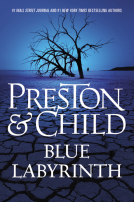
Pendergast Is Back!


Title:  Blue Labyrinth 
Authors:  Douglas Preston & Lincoln Child
Publisher:  Grand Central Publishing 11/11/14


Every year, I have a 'must read' on my list.  The new Pendergast by Preston & Child.   Now this year, they did something a little sneaky.  They gave away a free preview of 11 chapters on Amazon - guaranteed to whet any reader's appetite for the whole thing.

I was lucky.  I got a review copy of the entire book from Netgalley and I simply devoured it.  And fair warning, I'm a hardcore Pendergast fan, so this review might get a little…embarrassingly gushy!

The opening is both simple and shocking.  Pendergast opens his front door to find someone from his past murdered on his doorstep.  He knows this is a message to him…but what's the message?  And from whom?  Thus begins a chase around the world, from sunny California to the slums of Brazil.  And the chase has a timeline - a timeline that could result in the life (or death) of someone the readers know and love.

Blue Labyrinth pulls no punches.  There are shocks around every turn.   While not every old character is back, D'Agosta, Margo and, of course, Constance play pivotal roles in this drama - oddly, perhaps more than Pendergast himself at times.

And, of course, history plays its role as well, as we learn the tale of a mysterious and dangerous elixir and the lives it destroyed.

To be honest, I felt a bit like the last two Pendergast books were a tiney bit lightweight - as though they were setting the reader up for something.  This book is that something.  It's a fast read.  It's dark, tense, and Constance gets righteously awesome.  She's been showing her strength more and more in the past books and in this one, she finally comes into her own - and she is glorious.

And of course Pendergast is still brilliant, quirky, and believe it or not he'll do a couple of things that show he's more human than he likes to be.  There are a couple of surprises here!

The simple fact is that Preston and Child, yet again, deliver.  An absolute five star read and highly recommended!


Thursday, November 6, 2014

Beyond the Takeout Carton


Beyond the Takeout Carton - A Review of Chop Suey, USA

 by TakingaDayOff


Chop Suey, USA is a personal and sometimes impassioned look at the conditions of Chinese immigrants in 19th and 20th century America, the conditions they faced from other Americans, and how Chinese food was enthusiastically accepted by all Americans. Author Yong Chen gre up in China and came to the States in the 1990s as a graduate student, intending to return to China when he had earned his doctorate in American History. Instead he made America his home and has been here ever since, first on the East Coast, and now on the West Coast.

The first half of the book documents the difficult times the immigrants and even their children and grandchildren had. Racism was the norm and it left the Chinese community with only a few career options –- domestic work as cook, or opening their own laundries or restaurants. When white and black Americans discovered that the food in the Chinese restaurants was plentiful, inexpensive, and tasty, they took to it enthusiastically. Professor Chen explores the rapid rise of Chinese restaurants through the country and compares it to the rapid acceptance of American fast food in China over the past few decades.

Later in the book we learn more about the evolution of the Chinese restaurant and Chinese cuisine in America. Chop Suey, USA covers a lot of ground, about race relations, social trends, assimilation, cookbooks, and social classes in America.

Although Chop Suey, USA has a similar title to another book from recent years on the topic, Chop Suey by Andrew Coe, it is a very different book. Coe's book is also well-researched and entertaining, but Chen's book is more personal and focuses more on the immigrants themselves. If you are expecting a book about why America likes chow mein or who invented the fortune cookie, look elsewhere –- this is a deeper, multi-layered look at the people behind the food.


(Thanks to NetGalley for a digital review copy.)


Sunday, November 2, 2014

How Sweet is Too Sweet? A Review of Choir of Angels by Debbie Macomber

bookcover of CHOIR OF ANGELS by Debbie Macomber

Title: Choir of Angels
Author: Debbie Macomber
Published: September 30, 2014
This book was received from Amazon Vine program in exchange for an honest review.

I've been on a Christmas story binge.  I love how sweet all the stories are and they all have such happy endings.  But this one put a bit too much sugar in the mix for me and now I have a metaphorical toothache.  Perhaps is was the fact that there are three stories about the same three angels and it was just a little too much.  Or perhaps it was that the sweet endings were so contrived they seemed a bit forced?  But not all is bad between this cover.  There were some very nice high points (mostly the second story).

I chose this book because the name of the angels made me giggle inside.  Who can resist a the trouble making trio names Shirley, Goodness, and Mercy.  I'll hit the first and third story first as they had similar things I didn't like.  Both were very quick and had a lot of things going on in them.  Lots of characters, lots to fix, and lots seeming to go wrong.  I kept losing track of who was doing what and even who belonged to which family.  It was crazy!  They were both novella length and really needed to be about 50 pages longer to make them work.  The third book wasn't even one complete story, but three short stories that were told alternating through the chapters.  It was very confusing.

Now the second book was to die for.  I loved it, and would have loved to have read it on its own without it being sandwiched between the others.  Now I may be a little biased since it was the true romance of the bunch, but it just had a lot more going for it than the other two.  First, it was novel length.  I got to know my characters, their family, and really see how the trio of angels interacted.  I loved all of them.  The story was just the right about of sugary sweetness that I would expect in a Christmas romance, but there were still a few surprises and at one point it even seemed to fall apart.

If you want a feel-good holiday spirit romance, I would recommend giving story two, Those Christmas Angels, a shot.  It is sold by itself and was the best of the bunch.

Saturday, November 1, 2014

"The Bookseller" by Cynthia Swanson would be a good book club selection

bookcover of THE BOOKSELLER by Cynthia Swanson
This book is not due to be released until March 2015 but I don't want to wait until then to review it -- especially because I think it would be such a good book club discussion book and many book clubs choose a full year of books at the beginning of the year. 

The book is set in Denver in late 1962/early 1963.  The story is told in first person narration by the main character, a single 38-year old woman named Kitty Miller who owns a book story with her best friend Frieda.  Kitty starts having incredibly realistic dreams about an alternate life in which she has married and decided to use her full first name. In that life, people know her as Katharyn Andersson. 

I can't say too much about the story without giving out spoilers. But I appreciated how the author takes the reader deeper into both lives -- at the beginning both her single life as Kitty the bookseller and her married life as Katharyn seemed too good to be true (especially Katharyn's life) but over the course of the book the reader learns that there are difficult aspects to both lives and choices in both lives that Kitty/Katharyn must make.  While I was reading I kept changing my mind as to which life was more appealing to me.  And when Kitty started incorporating aspects of Katharyn's life into her own, I was really wondering what was going on and where the story was going!

I enjoyed this book a lot and will be recommending it to my neighbors even if we don't start up our book club again.  I will say that it is primarily a chick book -- I am not sure whether men will relate to it as much as women will.

This is the author's first novel.

I received an ARC of this book from the Amazon Vine program in exchange for a review.

Thursday, October 30, 2014

By the Roots - A Review of Plucked: A History of Hair Removal


bookcover of PLUCKED: A HISTORY OF HAIR REMOVAL by Rebecca Herzig

 by TakingaDayOff

Expecting a history of how the ancients removed their hair (you never see the Ancient Romans or Greeks with beards, do you?), I found that Plucked: A History of Hair Removal deals with that topic pretty neatly in the first few chapters. Historian Rebecca Herzig then moves on from the mundane of how body hair was removed until modern times (waxing, tweezing, burning), to how and why it has been removed for the past hundred years or so.

The ancients have nothing on us moderns for hair removal methods. Herzig describes early 20th century x-ray treatments for removing hair from the face, a painful and largely unregulated procedure. Radiation turned out to be a less than optimal solution to body hair, but as the century and science progressed, hormone therapy became the next craze in exfoliation. As fashions in clothing and hairlessness changed, laser treatment (also painful and sometimes unsafe) emerged. As the 21st century dawned, Brazilian waxing became as common as tattoos and another painful beauty routine was introduced.

Herzig discusses attitudes, science, advertising, the money angle (doctors found that specializing in laser procedure was more lucrative and easier than family practice, for instance). She doesn't ignore men -- although they have only recently begun tending to body hair other than facial in recent years, it's become almost a given that men will do some "manscaping."

Plucked is an academic look at hair removal, but it's entirely readable and fascinating for a general reader. Plenty to ponder as you tweeze your brows or undergo the agony of a bikini wax.


(Thanks to NetGalley for a digital review copy.)

Plucked: A history of Hair Removal
by Rebecca Herzig
NYU Press  
publication date: January 9, 2015 

Wednesday, October 29, 2014

Oh My God! I read Christian Fiction...And I liked it!


bookcover of LAST FAMILY STANDING by Jennifer Allee


Title:  Last Family Standing
Author:  Jennifer Allee
  • *Book Received through Amazon Vine Program for review.


It's rare that you'll see me reviewing Christian fiction, mainly because I tend to find that heavy-handed messaging overshadows the plot of the stories.

This is an exception. I really enjoyed this book.

The messaging is more in the way that people treat each other. There's a lot of growth, respect, and some really great people who learn how to accept, forgive, and love - and all without the author hitting you over the head with it.

Now, I do need to be honest, the reason I selected this book (aside from an interest in the basic plot) was that I love reality shows like Survivor. And if, like me, you enjoy those shows, you'll love this. The author obviously watches the shows and it comes through how much she enjoys them.

But for those of you who don't love reality shows, the story itself will get you through. It's hopeful, sad, joyful, and just a great story about love and the true meaning of family.

Is it Christian? Yes. Some of the characters mention their faith more than once, but these are the kinds of Christians who represent the best out there. They are tolerant, humorous, kind, they make mistakes and may not always do the right thing, but they are, at heart, good people.

Yet, I can't give it five stars.

There's a very sweet romance in the novel that was very rushed in the end. I felt a little cheated when the author basically told us what happened with that, rather than showing us. And there's a little too much fairy tale in how everything works out. I needed a little more reality in their family situations and a little less 'neatly tied up in a pretty package'.

But I would read the author again in a heartbeat - Christian fiction or not. She simply tells a good story!


Four Stars.

Tuesday, October 28, 2014

MUSEday Tuesday: Just My Type … Yours, Too?

(advance review copy courtesy Amazon Vine program)


Whether you are a fan of typography, history or a well-turned phrase, this novel rooted in historical research will grip you tight until you finish, and linger long afterward.


GUTENBERG'S APPRENTICE by Alix Christie 2014 US book jacket
U.S. book jacket
Gutenberg's Apprentice is grand and sprawling in all the right ways. Alix Christie demythologizes the icon we know as Gutenberg and humanizes him with a portrayal of a gifted, driven, high-strung, imperfect, visionary man. Receiving almost equal billing is Peter Schoeffer, a young man who becomes Gutenberg's apprentice.


Characters, setting, dialog, and pacing all are competent and keep a story this vast moving without getting muddled. 

However, where this book excels is Christie's adept descriptions of minute details, such as the crafting of the punches, and the casting of pieces of type. She comes by this knowledge not only academically but with ink under her fingernails. She apprenticed beginning at age 16 with master letterpress printers and as an adult, as she puts it, "kept a hand in the 'darkest art.'" It is fitting that someone with ink in her veins found documentation of the other key figures involved in Gutenberg's mighty achievement, and recognized that this was a story worth researching and telling.
GUTENBERG'S APPRENTICE by Alix Christie 2014 UK book jacket
UK book jacket

Any top-notch historical biographer could have done a serviceable job describing the years of intrigue, perseverance, and privation that went into the development of movable, metal type. It is our good fortune that the person who unearthed the rich additional information surrounding its birth was someone with ink in her blood.

The resulting tale is by turns luminous, sweaty, funny, and bittersweet. Pick it up on a Friday evening and you will be lucky to return to the 21st century before Sunday. And be warned, once you do, you will fire up your computer or mobile device and lose several more hours while you locate additional information about some of the people in the book and additional images from the time. (Saying any more would tread too close to being a spoiler, but be assured there are rich library resources available. If you'd like a hint, drop me a note in the comments.)


And now for the MUSEday Tuesday question:

I was surprised to find that this book has been published with two very different cover designs. The one on the left is the U.S. version; the one on the right is what readers in the UK are seeing. 

Which one is your favorite, and why? 


____________________________________
GUTENBERG'S APPRENTICE: A NOVEL
by Alix Christie
HarperCollins
Sept. 23, 2013


(U.S. and UK cover images courtesy author's website)


Michel Faber: From Victorian prostitutes to Christian missionaries in space

(Note: I received a free review copy of this book from Amazon Vine)

I read this book more than a month ago, but I'm posting my review today in honour of its official release date. I'm excited to see what everyone else thinks of the book. I suspect that you'll either love it or hate it, and I'm definitely on the love side. I was very sad to see that, following the death of his wife, Faber plans to stop writing novels.


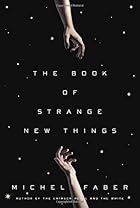
Book Review: The Book of Strange New Things by Michel Faber

I really enjoyed Faber's earlier novel The Crimson Petal and the White so I was excited to see that he'd written another one. The premise was also intriguing: a Christian missionary travels to another planet to work with the native population there, while receiving updates from his wife about the increasingly apocalyptic conditions back home on earth. The book interweaves the story of Peter's missionary work among the aliens with the story of his increasingly strained relationship with his wife, which suffers from the vast distance between them and the enormous difference in their circumstances.


There are some themes here that I don't normally find very compelling, namely issues of faith and marital difficulties. But I found myself completely absorbed in Faber's creation, tearing through this hefty volume in a matter of days. The characters all felt very real to me, with vivid personalities and abundant flaws. There were times when I would have liked more detail about certain events, particularly Peter's early days among the natives, but ultimately the book as a whole comes together very well. Various mysteries are satisfactorily resolved. The only aspect of the story that I found somewhat unsatisfying was its open-endedness; there are hints about how everything may turn out, but we don't actually see it all through to the end. I can understand why Faber stopped where he did; important decisions have been made and events have been put in motion, so that it might actually have been anticlimactic to pursue each thread down to its final resolution. I just wasn't quite ready to leave this story yet, which might speak as much to its power as to anything else.

A word of warning: despite the central role of faith, this is definitely not what I would classify as "Christian fiction". It opens with a sex scene and contains plenty of profanity, along with descriptions of bodily functions, masturbation, etc. This is the sort of content that could have come across as gratuitous, but instead it adds an element of gritty realism. The religious message is also not entirely unwavering, which I appreciated as a non-Christian reader.

I'd like to say more about the plot and the various issues that arise in the course of Peter's mission, but I think it's best to approach the story without too much prior information and just allow yourself to get caught up in the flow. There are plenty of surprising elements here whose impact might be diminished by reading about them beforehand. Peter sets off on a journey into the unknown, and I'm very glad that I had an opportunity to travel along with him. I just wish I could do a better job of explaining I liked this book so much; it's a powerful novel whose impact I can't seem to express in words. Reading it was a fully immersive experience.

Monday, October 27, 2014

The Story of a Real Life Secret Santa and How They Changed One Family's World

bookcover of THE 13TH GIFT: A True Story of a Christmas Miracle by Joanne Huist Smith
The 13th Gift: A True Story of a Christmas Miracle by Joanne Huist Smith

Book received through the Amazon Vine program in exchange for an honest review.

Just about everyone has heard of the Secret Santa tradition.  One where we get together. give gifts anonymously, and throw an office party.  But this Secret Santa was something really special and very unique.  They reached out to a family falling apart.  A family that didnt seem like it was going to survive through the Christmas season without some very serious emotional fallout.

When gifts start showing up at their doorstep (along with cute little verses that I lvoed), the mom is initially quite upset.  Upset in a way that I really didn't understand until about half way through the story.  These gifts from strangers brought a holiday to her that she was trying desperately to erase from her life.  A holiday that brought so many bittersweet memories with it.

Thankfully, her youngest won't let her throw the gifts away, and even manages to make a game of trying to catch Santa in the act.  Slowly but surely these gifts - one for each of the 12 days before Christmas - begin to draw the family not only into the holiday spirit, but it brings them back together.  For the first time in a long time, they find themselves working on a common project - a who-dun-it (in a good way) type of mystery.

In the end, things are still not normal, but the family has learned to come together to deal with all the things life throws at them.  They have also built some amazing memories together that they continue to share through the years.  This is what a Christmas story should be all about.

Saturday, October 25, 2014

Romeo and Juliet and Companions

bookcover of  CLOSER TO HOME (The Herald Spy, #1) by Mercedes Lackey

Two families, both alike in dignity, in fair Valdemar where we lay our scene.

Lackey takes on The Bard's most famous tale in the first book of her new Herald Spy trilogy. Mags is in Whites, finally, and ready to take on the full responsibilities of a Herald and King's Spy, as if he hadn't been doing that in the five book series covering his time as a trainee. Incidentally, if you have not read The Collegium Chronicles, do. This book picks up right after book five of that series ends, and you will need the backstory.

It is love at first sight for young Violetta, when she spies the handsome stranger at the ball, a love so strong that she is shattered to learn that stranger is the son of her father's worst enemy, born into a family with whom her family has a generations long bitter feud.

But when he sneaks into her father's party masked and dances with her, declaring his undying love, she is certain their love can conquer anything. We are treated to a balcony scene with dialog that is somehow poetic without being corny, and to a desperate attempt at a wedding against the wishes of both families. It's worth it for the balcony scene alone. We even get the flighty nurse.

We don't get to see Bear or Lena in this, which is a little disappointing, but we do get a delightful new group of characters. Amily comes into herself in a host of different ways.

It's hard not to compare any Herald to Vanyel, arguably her most popular character, and while Mags isn't nearly as serious, and the series had a substantially lighter tone, he is every bit as compelling. My only complaint is that it is way too short and I'm impatient for the next one.