Showing posts with label Historical Fiction. Show all posts

Wednesday, November 26, 2014

Best Books of 2014

Just in time for the holiday season, here are some of our bloggers' picks for the best fiction and non-fiction books of 2014. Rest assured, we agonized over these choices. Please tell us why you agree or disagree in the comments. And if you think there's a book we overlooked, let us know!

__________

Silea's picks:

Fiction: Red Rising, by Pierce Brown
This book starts with a gut-punch and never lets go. While relying on many of the tropes now common in YA fiction (member of a suppressed class trying to bring the system down, etc), it manages to be entirely unique.


Non-fiction: The Vinedresser's Notebook, by Judith Sutera
This book is simple, meditative, and contemplative, based primarily on grape vine metaphors to teach patience and humility. Though short, it's powerful. I don't believe it's possible to read this book and not become a better person in the process.

__________

Suzanne's Picks

Fiction: An Unnecessary Woman, by Rabih Alameddine:
Aaliya isn't the most likable fictional character: she shuns her neighbors, preferring books to reality. But then her reality is Beirut, through civil war, chaos and lots of family upheaval. Aaliya, however, is an astute, wry observer of those realities, and Alameddine is a lyrical writer: the combination has made the novel, one of the first I read this year, one of the most memorable and my favorite.


Non-fiction: A Spy Among Friends, by Ben Macintyre
Focusing on Kim Philby, one of the British spies whose betrayals rocked the British establishment in the 1950s and 1960s, this takes a different approach to the story, telling the tale through the eyes of Nicholas Elliottt, Philby's closest friend in MI6. For Elliott, Philby's betrayal was more than just treason: it was a personal violation of the most profound kind. The book is both a fast-paced spy yarn and a heartbreaking tale of betrayal and misery.

__________

JWP's Picks

Fiction: Crossover, by Kwame Alexander
Josh Bell thinks his school year is going to be all about basketball and how amazing he and his twin brother can be on the court, but life has something else in store.  His words zing off the page showing how great poetry can be to illustrate life's good and bad moments. 

Non-fiction: Birdmen: The Wright Brothers, Glenn Curtiss, and the Battle to Control the Skies, by Lawrence Goldstone
A title with a little bit of everything, Goldstone makes the history of heavier than air flight available to even the least scientific of minds.  Thrills, chills, spills and daredevils from the golden age of early aviation all highlight the battle to get airplanes and their inventors off the ground. 

__________

Dunyazad's Picks

Fiction: The Book of Strange New Things, by Michel Faber
I judge the quality of a novel by how much I wish I could be reading it when I'm doing other things. In this case, those other things included visiting friends for the weekend and attending the National Book Festival, but I still found myself sneaking out this book to read a few pages whenever I could. The story of a missionary witnessing to aliens on another planet while his wife experiences apocalyptic conditions back on earth was unlike anything I've read before.

Non-Fiction: How We Learn, by Benedict Carey
This is probably the non-fiction book that's had the most real impact on my life this year. It's a fascinating synthesis of recent and not-so-recent findings in learning science, or in practical terms, a book full of evidence-based suggestions for how to learn more effectively and efficiently. Besides the helpful ideas themselves, I found it extremely encouraging just to read that forgetting is not the enemy of learning, that there are specific techniques that make it easier to remember foreign vocabulary within a reasonable time frame, and so on. This book gives me reason to hope that I'm nowhere near the limits of my abilities yet.

__________

TakingaDayOff's Picks


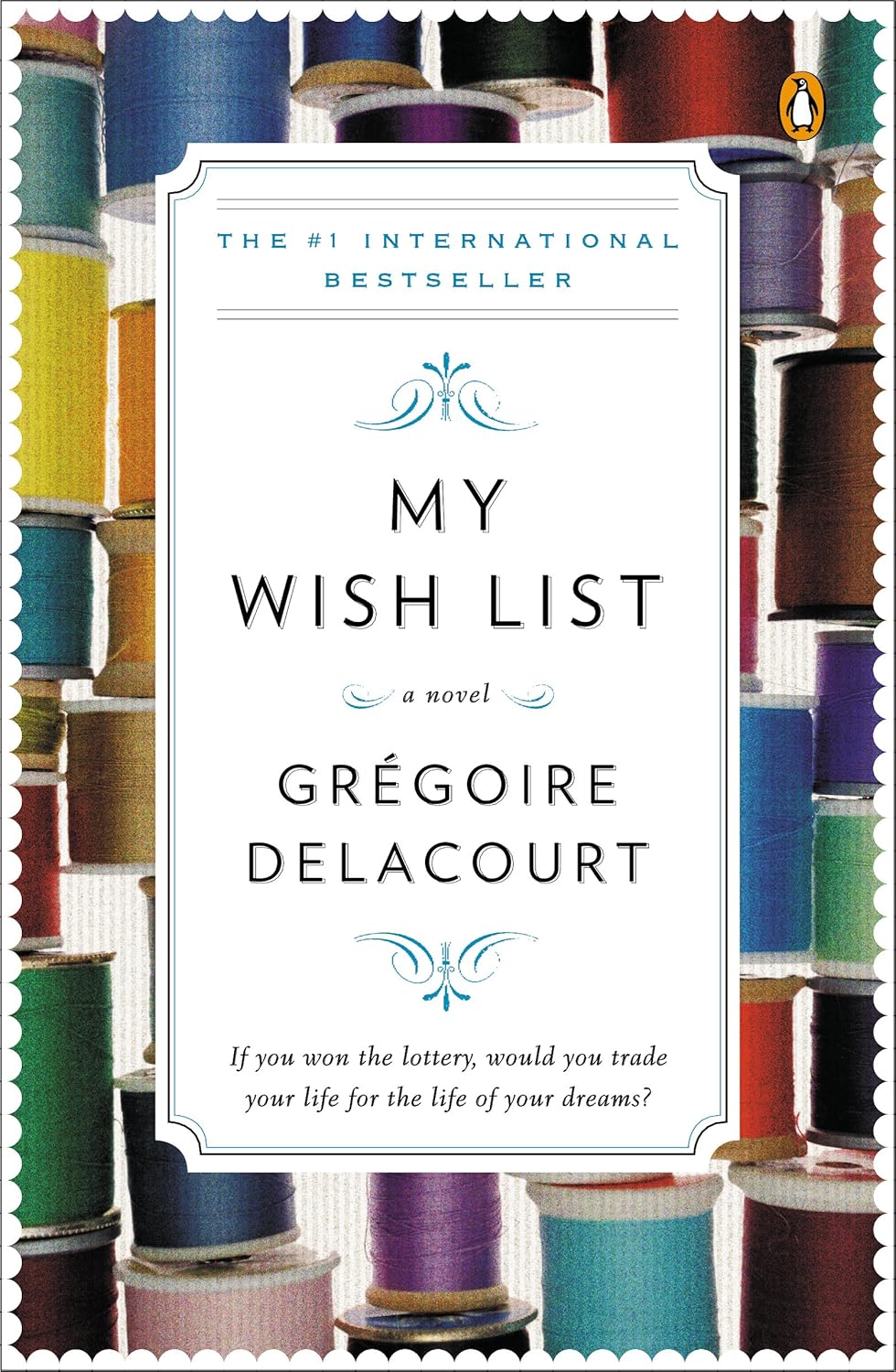
Fiction: My Wish List, by Gregoire Delacourt
This book asks an unoriginal question (What if you won the lottery?) and answers it in a completely original way. A compact story that felt simultaneously surprising and inevitable.


Non-Fiction:  The Shelf: Adventures in Extreme Reading, by Phyllis Rose
A book in which reading a random shelf of library books becomes a discussion about book covers, undiscovered authors, blurbs, how libraries decide which books to discard, dog training, and occasionally, literature. The Shelf combined two of my favorite topics, books about books and harebrained schemes, brilliantly.


__________

Sandy Kay's picks

 Fiction: Red Rising, by Pierce Brown
If you mixed together a dash each of Lord of the Flies, Hunger Games, Hogwarts Academy, and Roman history and set it hundreds of years in the future you might come up with this book. But it is fresh and exciting even with all those familiar elements. I could barely put it down and can't wait for the next book in this trilogy due in January 2015.

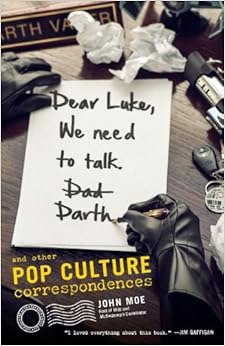
Nonfiction: Dear Luke, We Need to Talk, Darth: And Other Pop Culture Correspondences, by John Moe
I read mostly for entertainment so don't do much nonfiction. This collection of John Moe's imagined letters, e-mails, text messages, and other correspondence behind some favorite pop culture references made me laugh. 

__________

CK's picks

Front Cover: THE SECRET OF MAGIC by Deborah Johnson. Courtesy Penguin PutnamFiction: The Secret of Magic, by Deborah Johnson
Deborah Johnson stole my heart back in January with The Secret of Magic, a masterful interweaving of tradition, resilience, injustice, idealism, and respect. In impeccably measured prose that is all the more beautiful for being unassuming, Johnson introduces us to an idealistic young lawyer, a gentle and righteous father, and the author whose words have impacted both their lives. Even as she evokes the tensions of the post-WWII South, she also layers in such talismans as ladybugs, mistletoe, and a mailbox full of bluebirds. These and many other moments sing of simplicity while they hint at deeper meaning. 

Non-fiction: The Nazis Next Door, by Eric Lichtblau
Front Cover; THE NAZIS NEXT DOOR by ERIC LICHTBLAU. Courtesy Houghton Mifflin Harcourt. Coincidentally, my other selection also centers on events in the U.S. just after WWII. Eric Lichtblau's The Nazis Next Door: How America Became a Safe Haven for Hitler's Men is a thorough, professional, and incredibly frustrating exploration of the warm welcome the U.S. government extended to a number of people involved in the German war effort. This book is an implicit indictment of the choices some members of our government made that ran counter to the tenets on which we like to think the social contract of our country exists. When you tackle this worthwhile book, give yourself permission to partake of it in 50- to 60-page increments. 


__________


Note: Most, if not all, of these were received as ARCs through the Amazon Vine program. 

Saturday, November 22, 2014

Tudor Mysteries! The Newest, the Best, and the Ones to Watch For...


The Queen is dead; long live the Queen! So begins The Tudor Vendetta by C.W. Gortner, the third in a trilogy of mystery novels revolving around a young man whose life is interwoven with that of the young Elizabeth Tudor

When Brendan Prescott hears the news, he is ready to hop on his horse and head off to London in a second. After all, he has been in exile in one of Switzerland's Protestant enclaves for years, having had to flee the Catholic court of Mary Tudor to protect both himself and the young heir to the throne, her half sister, Elizabeth. But now the bitter middle-aged queen is dead, and with her, her reign of religious terror, and Elizabeth has ascended to the throne. Before long, Brendan and his mentor, spymaster Francis Walsingham, who has spent the last several years trying to teach him everything from how to detect poisons to the intricacies of secret codes, will indeed be back in London. But all is not well at court. Elizabeth may be on the throne, but that doesn't mean that her enemies have been vanquished. Nor have Brendan's own foes all disappeared: his old enmity with Robert Dudley, now the queen's favorite, burns as hot as ever, and he keeps having uneasy dreams about a villain who should be -- who almost certainly is -- dead. And yet... And meanwhile, he can't find a way back to the love of his life, Kat, whom he had to abandon without a word when he fled to the Continent to escape the old queen's wrath and vengeance.

So when Elizabeth calls on Brendan to solve a puzzle, warning him that it involves a dark secret of her own, he is all too eager to help. At the very least, it will extricate him from his woes at court and give him a way to demonstrate his loyalty. But when he heads north to investigate the disappearance of Elizabeth's loyal lady, Blanche Parry, he finds enmeshed in even more secrets than he had imagined. It's bad enough to discover that he has been asked to conduct his investigations in a household of devout Catholics who have little reason to love the new queen; far worse to discover that the secrets they are keeping threaten not only his life but the safety of the realm.

This is more of a rollicking adventure yarn than the kind of mystery yarn that relies as much on rich character studies and detailed, slowly developed plots. They are fun and lively entertainment -- puzzles are solved, sure, but the next event is just as likely to be a swashbuckling sword fight, a desperate race on horseback to save a life, or rescue someone from poisoning, as it is anything that reveals something about Brendan's personality beyond the basics established at the outset. He's an adventure hero of a certain type, and that's pretty much all you need to know. Which is fine, because this is entertainment fiction, pure and simple.

Two caveats, one large and one small. If you're a historical purist, you may want to approach with caution. Gortner takes some liberties with the known facts -- and even the probabilities -- of history in his stories, including the parentage of Brendan himself, and one of the biggest is the key revelation of the novel. I confess my eyes rolled and I groaned to myself: it was simply such a challenge to my credulity. But it's not literally impossible, as are the most bizarre inventions of Carolly Erickson, so I tried to ignore it and soldier on, and soon got back into the flow of things. But if you're really a stickler for this kind of stuff (I'm struggling to avoid spoilers) you may want to beware. The second caveat is much smaller. Read the first two books first: you'll understand why Brendan feels his fate is so tied to Elizabeth's, why he loathes the Dudleys, understand just why Kat is important to him and why even dreaming of the assassin from book two terrifies him so much. The brief explanations provided are adequate, but you won't feel you've just walked into a movie half an hour after it has started. And you'll have so much more fun: while the novels aren't as thoughtful or well-constructed as are Gortner's biographical historical novels (The Last Queen, etc.), they are still fun. 


A copy of the book was made available to me by the publisher via NetGalley in exchange for an honest review.

Tudor England, and especially Elizabeth England, seems to be increasingly fertile ground for authors writing historical mysteries. I can think of several other fabulous mystery series that you might want to hunt down, the grandaddy of them all being one set in the era of Henry VIII, Elizabeth's father.

Dissolution by C.J. Sansom: This is the first in a series of books; the latest, Lamentation, will be making its U.S. debut early in 2015 and I can say (having read it) that it may be the best of them all. Sansom's hero is an unlikely figure: Matthew Shardlake is a lawyer and a hunchback who, in spite of himself, keeps getting embroiled in the doings of the great and the good at court. Sansom does a simply amazing job of combining the lives of ordinary Londoners (and their court cases) with the high stakes political battles -- the dissolution of the monasteries, war with France and in the upcoming book, the battle over which court faction will be in pole position when the king dies, to hold power for the young Edward VI. Just, wow.

To Shield the Queen by Fiona Buckley: First published in the late 1990s, this series is being reissued and continued -- hurrah! Young widow Ursula Blanchard is asked by Elizabeth Tudor to help quash rumors about the ill health of Amy Robsart, the wife of Robert Dudley, her favorite. Then Amy dies -- of a broken neck. Murder, suicide, or...? Ursula sleuths for the queen and juggles her own divided loyalties, as she is wooed by an attractive man who may not be a supporter of Elizabeth. First of a great series.

Martyr by Rory Clements: You didn't know that William Shakespeare had a big brother, John, who was in Walsingham's employ as an "intelligencer"? For shame! *Grin* These novels are lots of fun, set in the final decade or so of Elizabeth's reign, a period that we tend to think of as calm (Mary Queen of Scots now headless; the Armada sunk). Not in Clements's eyes! Great plots; richly-developed characters and lots of shades of grey. His evil characters are those incapable of seeing the world except through rigid and violent eyes of zealots, whether Protestant or Catholic. I'm now reading the latest book, The Queen's Man, which is a prequel. 

Heresy by S.J. Parris: The first in another Elizabethan series, this one revolving around an unusual real life character: renegade monk Gioradano Bruno, who fled to England to escape the Inquisition. It worked, albeit briefly, and the author has imagined a role for him here as spook: a philosopher of whom the authorities can take advantage, with entrĂ©e to places those authorities can't go (like the French embassy). Parris sets her stories in the 1580s, and real life characters range from the likes of Sir Philip Sidney to Walsingham -- and she tosses in some great stuff about the philosophical debates of the age, to boot. 

Tuesday, October 28, 2014

MUSEday Tuesday: Just My Type … Yours, Too?

(advance review copy courtesy Amazon Vine program)


Whether you are a fan of typography, history or a well-turned phrase, this novel rooted in historical research will grip you tight until you finish, and linger long afterward.


GUTENBERG'S APPRENTICE by Alix Christie 2014 US book jacket
U.S. book jacket
Gutenberg's Apprentice is grand and sprawling in all the right ways. Alix Christie demythologizes the icon we know as Gutenberg and humanizes him with a portrayal of a gifted, driven, high-strung, imperfect, visionary man. Receiving almost equal billing is Peter Schoeffer, a young man who becomes Gutenberg's apprentice.


Characters, setting, dialog, and pacing all are competent and keep a story this vast moving without getting muddled. 

However, where this book excels is Christie's adept descriptions of minute details, such as the crafting of the punches, and the casting of pieces of type. She comes by this knowledge not only academically but with ink under her fingernails. She apprenticed beginning at age 16 with master letterpress printers and as an adult, as she puts it, "kept a hand in the 'darkest art.'" It is fitting that someone with ink in her veins found documentation of the other key figures involved in Gutenberg's mighty achievement, and recognized that this was a story worth researching and telling.
GUTENBERG'S APPRENTICE by Alix Christie 2014 UK book jacket
UK book jacket

Any top-notch historical biographer could have done a serviceable job describing the years of intrigue, perseverance, and privation that went into the development of movable, metal type. It is our good fortune that the person who unearthed the rich additional information surrounding its birth was someone with ink in her blood.

The resulting tale is by turns luminous, sweaty, funny, and bittersweet. Pick it up on a Friday evening and you will be lucky to return to the 21st century before Sunday. And be warned, once you do, you will fire up your computer or mobile device and lose several more hours while you locate additional information about some of the people in the book and additional images from the time. (Saying any more would tread too close to being a spoiler, but be assured there are rich library resources available. If you'd like a hint, drop me a note in the comments.)


And now for the MUSEday Tuesday question:

I was surprised to find that this book has been published with two very different cover designs. The one on the left is the U.S. version; the one on the right is what readers in the UK are seeing. 

Which one is your favorite, and why? 


____________________________________
GUTENBERG'S APPRENTICE: A NOVEL
by Alix Christie
HarperCollins
Sept. 23, 2013


(U.S. and UK cover images courtesy author's website)


Sunday, October 26, 2014

Historical Goofs, and Other Stuff that Spoils Historical Novels: Pam Jenoff's "The Winter Guest"

I think I read my first historical novel when I was eight years old; certainly, by the time I was nine, I had graduated to reading adult historical novels, such as those by Jean Plaidy and Georgette Heyer. From these and other great novelists working in this genre, over the decades I have learned what makes a historical novel convincing -- whether it's something as weighty as Wolf Hall or a slight historical romance -- is that its characters and situations must feel authentic and true-to-life and the author must be spot-on accurate in their presentation of the historical facts. 

Occasionally, I run across an egregious example of a book that violates both of these. The winner may be Carolly Erickson's The Favored Queen, a novel about Jane Seymour, Henry VIII's third wife. Erickson likes to write what she refers to as "historical entertainments" (translation: novels with no connection to historical truth whatsoever), so perhaps I shouldn't have been terribly surprised to encounter a scene in which Anne Boleyn is stricken with sweating sickness while shut up in quarantine with Catherine of Aragon, Jane and the other court ladies, at which point, Catherine's chamberlain tries to stuff her body out of the window and into the moat in order to protect the rest of them from contagion. Yes, really. Oh, and Queen Catherine saves her. Yes. The icing on the cake in that little gem? Henry's favorite term of endearment for Anne Boleyn is "puffball". Okaaaay.


bookcover of THE AMBASSADOR'S DAUGHTER by Pam JenoffIt gets tougher when looking at Pam Jenoff's novels, however. She's not offering up historical entertainments, but historical fiction -- and historical fiction set against important events in the recent past (such as the Versailles Treaty negotiations that ended World War I and paved the way to World War II in The Ambassador's Daughter) and the Holocaust, as in the just-published The Winter Guest

The former is a more tedious read, but at least it doesn't distort historical facts and ask you to imagine six impossible things before breakfast. It does involve a willing suspension of credulity -- how could Margot Rosenthal, its heroine, have traveled to England from Germany to sit out WW1 as enemy aliens after the outbreak of that war? -- but its major flaw is simply that Margot is a rather silly young woman. Presumably she's not obtuse, and yet she fails to realize just how bad the bloodshed was on the Western Front. Similarly, although her father is now involved in the peace negotiations, she displays an astonishing lack of judgment and awareness, chattering away about the gossip surrounding the conference at a louche Left Bank cafe among people she has just met (with predictable consequences...) She's a passive character, whose main interest simply seems to be her struggle to reconcile her growing romantic interest in a young German officer who is party of the military delegation to the Versailles talks with her engagement to marry a young man she hasn't seen throughout the war, a family connection whom she realizes she neither knows nor loves.  


bookcover of THE WINTER GUEST by Pam JenoffLove stories -- especially historical romances -- work best when they are about more than just a young woman agonizing about the man she loves and how to be with him. Especially when the backdrop is a time of high drama. That's particularly true of Jenoff's latest book, The Winter Guest, whose heroine, Helena Nowak, is at least a tougher and more resilient young woman. It's Poland, still early in World War II, and a soldier has literally fallen out of the sky near the Nowak family cottage. Helena -- who, along with her twin sister Ruth, is caring for their three younger siblings -- almost literally trips over him. True love follows, quite rapidly.

Here's my big beef with this book. As Sam Rosen, the soldier, makes clear later on, this is the winter of 1940/41. (He refers to war between Hitler and Stalin as still being in the future.) In other words, it is at least a year before America became involved in the war. And yes, it's clear that Sam is an American soldier, serving in the US forces and not in the British army. (Moreover, the Polish resistance keeps talking about the Americans coming to save them.) How can I trust an author who has an American soldier running around occupied Europe a year before American forces would even have been doing any such thing? Spooks, sure, but not soldiers. And Sam isn't a spook, he's a soldier. Moreover, he's a soldier who says he can get Helena's young siblings onto a "kindertransport" train from Czechoslovakia to safety. Trains that stopped running in 1939. What on earth? 


I can accept that Jenoff glosses over the traumatic details of life in occupied Krakow -- Helena seems remarkably emotionally unaffected by the sights she witnesses at a hospital that is the victim of an SS Aktion and in which she is nearly caught up, relative to her emotions for Sam and her sibling rivalry with her resentful twin, Ruth. It's tough, but it's possible. After all, Jenoff's mandate is to write a romance; to tell a captivating story. 


But it should also be a believable one. And to start off with dates that don't match what is historically feasible, and wrap up with a twist that is beyond the bounds of all probability (revealing it would be spoiler-ish, I'm afraid) is just too much. 


And so, sad to say, I have turned the final pages of my last historical novel by Pam Jenoff. There are plenty of other writers out there doing precisely what she is, just as well or better, without twisting the facts or creating implausible situations or heroines. It's the facts that bother me most. Lots of readers won't bother with extensive histories of, say, the Tudors, and that's just fine. But that makes it all the more important that novelists ensure that their readers don't end up thinking that "puffball" was a real Tudor-era term of endearment...


I received an Advance Review Copy of A Winter Guest from the publishers via Amazon Vine, and of The Ambassador's Daughter via NetGalley. Both novels are published by Harlequin.