I am tired today and it is all Phillip Margolin's fault. I started reading this book last night and expected to be able to put it aside to sleep, but I kept waking up and reading a little more until I finally gave up, stayed awake, and finished it.
This stand-alone novel is a very different style of mystery so if you are a fan of the author's series be prepared for a change. Rather than one main character who the plot follows through the entire book, there are a couple of them and the plot is not linear. In fact, it is not just one story but three interrelated stories that take place in 2015, 2005 and 2000, respectively. And the style is a little bit of legal thriller and a little bit of amateur sleuthing mystery.
The book starts in 2015 with Stacey Kim, an aspiring novelist in NYC who gets inspiration from a photograph at a museum and decides to get the facts about it as background research for her book. The 2005 storyline is about the murder investigation in which the photographer is a witness and the subject of the photo is a suspect. The main character in that section is Jack Booth, an Oregon prosecutor brought to Palisades Heights to help the local DA with a high-profile murder investigation. Jack has history with the photographer, which leads to the 2000 story when Jack was a young prosecutor. Eventually the book returns to the present and all the story lines come together.
That all sounds more complicated than it is and the interrelated stories both keep the plot moving and give the reader insight into the characters' personalities and backgrounds. (Interestingly, Stacey was the least interesting character to me because her story is all in the present and she lacked the depth of the other characters.)
I had an idea who the killer might be, but for most of the book it could have been almost any of the characters except Stacey. The confession was a little abrupt and it seemed to me that the evidence that prompted it could have been explained away, but those are minor quibbles with a book that not only kept my interest but kept me awake and reading. If you like smart mysteries, this one is for you.
In a case of art imitates life, the author got the inspiration for the book from a photograph -- and that photo is on the cover of the book.
I received a free ARC of this book from the Amazon Vine program in exchange for a review.
We're a bunch of independent and independent-minded readers, eager to share our thoughts and opinions of upcoming and recently published fiction and non-fiction. Join the conversation!
Saturday, November 15, 2014
Thursday, November 13, 2014
The Story Behind It's a Wonderful Life
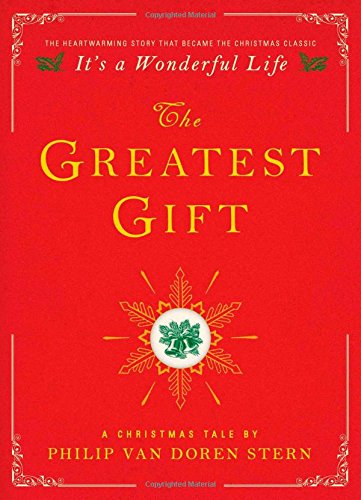
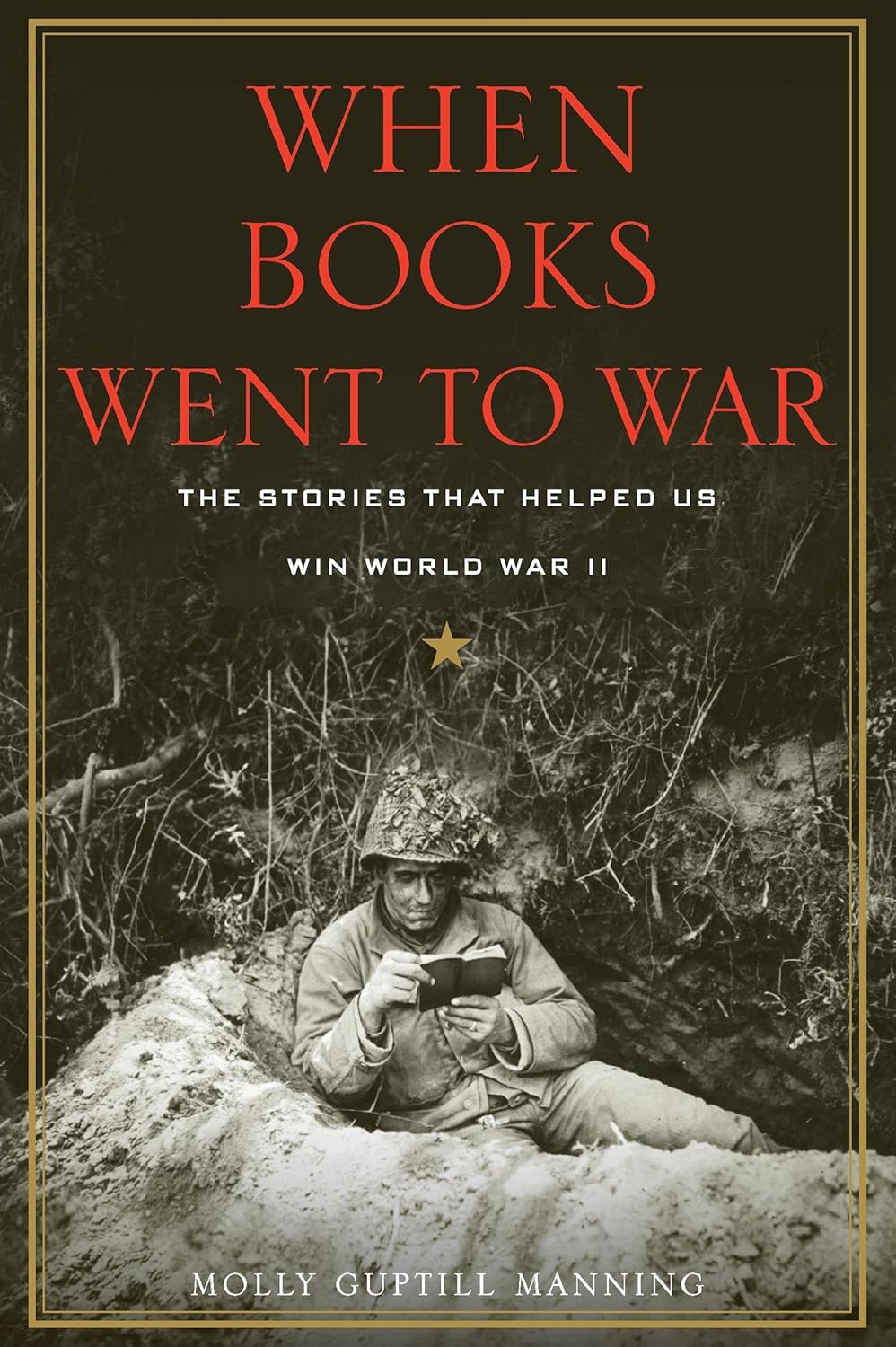
Browsing the new fiction table at the bookstore yesterday, I saw one of those slender, bright red books that seem to proliferate at the holidays. Normally, I barely notice these books that appear to exist solely as desperation gifts. This one was The Greatest Gift: A Christmas Tale. But it was the author's name that caught my eye. Philip Van Doren Stern was a major figure in the book I'd recently finished. In When Books Went to War: The Stories That Helped Us Win World War II, a terrific book about the program that sent millions of pocket-sized paperbacks to Americans fighting overseas, Philip Van Doren Stern was a major character. As the general manager of The Armed Services Editions, he helped select which titles would be reformatted for military use, edited and anthologized some editions, and oversaw the entire project.
The Greatest Gift is only 64 pages long, and half of
those 64 pages are an afterword by Stern's daughter, Marguerite Stern Robinson. She describes how her father wrote the story in 1939. His agent tried to place it in one of the many magazines that published fiction at the time, but was not successful. She told Stern that no one was buying fantasy stories these days. Finally in 1945, Stern self published 200 copies of the story and sent them to his friends and family, along with that year's Christmas cards. Frank Capra saw it and immediately wanted to make a movie of it.
Capra, who had interrupted his successful career as a Hollywood director to join the Army, had spent the war making propaganda films. He was at loose ends on his return to civilian life, as so many returning soldiers were, and making a film that recalled the pre-war days seemed just the ticket. But it was not a hit with audiences, who overwhelmingly preferred William Wyler's movie, The Best Years of Our Lives, which was released at the same time as It's a Wonderful Life. Wyler, also a returning war veteran, tapped into what audiences wanted, with a story of three men who were having difficulty transitioning to civilian life.
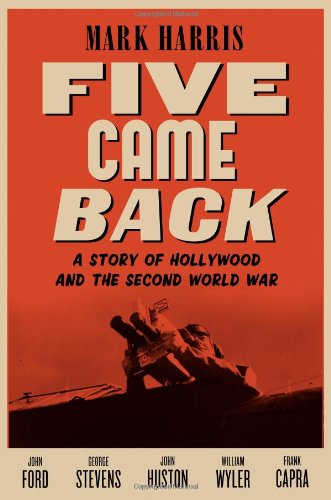
Capra and Wyler are among the five directors that Mark Harris has written about in his book, Five Came Back: A Story of Hollywood and the Second World War. Five Came Back is a detailed and often dramatic look at how five civilians, from different backgrounds and generations, adjusted to war, and then adjusted to peace when they came back to a very different America. Either Five Came Back or When Books Went to War would be a great gift for history fans.
As for that scene in It's a Wonderful Life at the library, it turns out that in the original short story, George's wife, Mary, was not destined to become an old maid librarian (horrors) if George had never been born -- she simply married someone else.
The Christmas Gift: A Christmas Tale
by Philip Van Doren Stern
Simon & Schuster, 2014
When Books Went to War: The Stories That Helped Us Win World War II
by Molly Guptill Manning
Houghton Mifflin Harcourt
on sale December 2, 2014
Five Came Back: A Story of Hollywood and the Second World War
by Mark Harris
Penguin Press, 2014
~~
Wednesday, November 12, 2014
America in Decline: A very readable but bleak portrait
Author: Bob Herbert
Publisher: Doubleday, 10/7/14
Note: I received a free review copy of this book from Amazon Vine.
I started this book eagerly and tore through the first half. Herbert paints a powerful picture of various ways in which America has gotten off course, and he makes his account very readable by including the stories of individuals to support each chapter. So we don’t just hear about how infrastructure is crumbling and needs a huge injection of cash to get up to an acceptable standard, we also hear about the personal experience of a woman who survived the collapse of the I-35 bridge in Minneapolis. This makes for a very compelling narrative.
Everything was going well until just over halfway. I really enjoyed Herbert’s first chapter on education, where he vividly describes the devastation wrought by draconian budget cuts. So it came as a surprise to me when he started the following chapter with the claim that American education is actually perfectly fine. Test results showing that American students lag behind others have nothing to do with the quality American public education, he says, but are instead just a result of the fact that America has more poor students than other countries. Poor students tend to do poorly in school too. It follows that there’s no point in trying to improve the quality of education; we have to address poverty first.
I understand why he’s saying this. He’s basically repeating the position of Diane Ravitch, an education advocate who deeply opposes the current focus on charter schools and standardized testing. I’m actually very sympathetic to this position, at least in part: I do think that excessive high-stakes testing is destructive and results in teaching to the test without actually improving learning outcomes, and I do think that charter school policies, which somehow allow charter schools to get rid of disadvantaged students so that their overall scores look higher, are extremely problematic. I believe that reducing poverty is important too. But I have no idea how this critique of certain aspects of educational reform leads to the conclusion that there’s no room for improving education at all, so we shouldn’t even try. Surely Herbert’s previous chapter, about the problems with funding cuts, implies that education would be improved by restoring funding, for one thing. This seemed to be a case where Herbert’s position was established beforehand, and he was just going to stick to it, without actually providing careful argumentation to support his case.
The situation got even worse in a later chapter, when he turned to a critique of online schooling. I’m sure most people would agree that online schooling isn’t an ideal learning environment for most children, since there’s a lot of value in face-to-face interaction, even beyond the educational. But I thought Herbert’s arguments against it were terrible: he cites test scores showing that students don’t do as well at online schools, and then mentions the defense given by an executive of one of these online schools: the students who choose online schooling are generally not the best and brightest; they tend to be lagging behind even before they start, etc. In other words, it’s an issue of adverse selection bias.
Somehow, Herbert misses the fact that this is the exact same argument that he himself gave in support of American public schools: he said that poor test results don’t reflect on the quality of teaching, but are just the result of a comparatively disadvantaged student body. When the argument supports his position (American schools are okay), then it’s valid; when the argument supports another position (online schools are okay), then it’s invalid. This is extremely shoddy reasoning. Herbert doesn’t even bother to refute the argument made by the proponent of online schools, instead trying to attack his credibility by pointing out that he earns $5 million per year as the CEO of this online schooling company. (This is another theme running through his book: successful money-makers are generally bad. Again, I agree that the distribution of wealth needs to be drastically reformed, but I don’t think highlighting the wealth of an individual serves as a refutation of that person’s ideas.)
The strange thing is that I tend to fall on the same side as Herbert on most issues. I’d like to see a more equal society, with more spending on infrastructure and less on war; I’d like to see students receiving a good public education, in an atmosphere free from antagonism and high-stakes testing, rather than studying at for-profit online schools. But I’d also like to read a book with solid argumentation, not one that relies on the assumption of a sympathetic reader.
This is a book about black and white, right and wrong. There’s no room for nuance in Herbert’s bleak portrait of America in decline. This is all well and good, up to a point. You can easily find yourself reading along in agreement, nodding at Herbert’s arguments and lamenting with him the decline of the nation. But it only takes one area of disagreement to start questioning the whole edifice. In my case, it was his blithe argument that America’s schools are just fine, and the only way to improve their results is to pull more students out of poverty.
I’m sorry, but I’ve been the smart kid in a public education system that caters to the lowest common denominator. I’ve graduated high school with an A+ average and found that I wasn’t prepared for my university math classes, where the top students had attended private schools or came from other countries. I fully believe in fighting poverty, but poverty isn’t the only problem with the American education system. Real-life issues just aren’t that simple. There isn’t one “solution” that will fix American education once and for all, and by promoting that perspective (“my way or the highway”), Herbert is just adding to the toxic atmosphere surrounding educational reform. I’d much rather see support for multiple evidence-based improvements.
After reading this book, I still believe that money should be spent on infrastructure rather than war, that cuts to education funding are bad and out-of-control corporate lobbying is worse. Basically, this book has reinforced the ideas that I had going in. It did also make me much more aware about issues involving the military, like the use of more powerful explosives that result in multiple amputations and astronomically higher costs for veteran health care. But for the most part, this isn’t a book that you read to be informed or challenged. It’s a book that you read to reaffirm your existing perspective, and it does that pretty well, up to a point.
But even if you do agree with everything that Herbert says, you may occasionally find that you need to put the book down just because it’s so bleak. I could only spend so much time reading about how horrible everything is before I needed to take a break. I was particularly struck by the contrast to Nicholas Kristof and Sheryl WuDunn’s recent book A Path Appears, which I also read recently and which takes a very optimistic evidence-based approach to making a difference in the world. Herbert does end on a note that’s not quite despair, though I wouldn’t really call it optimism: he says that if citizens as a whole decide that the status quo is unacceptable, then change can eventually come about, as it did with emancipation, the suffrage movement, and civil rights. But the details of how to get there aren’t quite clear. Unlike Kristof and WuDunn’s encouraging presentation of multiple paths to a better world, Herbert’s book lives up to its title in conveying a sense of an America that’s hopelessly lost.
Tuesday, November 11, 2014
1914: A Rapidfire Tour of Some of the Best World War I Fiction (So Far...)

Another season of Downton Abbey on television this fall will remind us of some of this again, as its characters grapple to live in a post-World War 1 universe. Then, too, there have been today's Remembrance Day/Veteran's Day services, marking the anniversary of the hour and the day that the guns finally fell silent, at 11 a.m. on November 11, 1918.
So, you'd like to read more about this, but are averse to the required texts (All Quiet on the Western Front was great in high school, but really...) and don't want to delve into military histories or other dense non-fiction tomes? Here are some suggestions. Not all of them are new. Indeed, in some places, I've deliberately avoided books that already get a lot of attention (like the two mysteries series penned by the mother/son writing duo, 'Charles Todd') in favor of others that might be slightly more off the radar. All of them are worth seeking out, for one reason or another.
Regeneration
Pat Barker
Sure, it's literary fiction -- but it's also one of the finest antiwar novels ever penned. What is real madness, the willful waste of millions of lives in the trenches, accomplishing nothing, or attempts to restore to sanity the shell-shocked men at institutions like Craiglockhart, so that they can be returned to the carnage? Those are some of the themes; readers will meet poets Wilfred Owen and Siefried Sassoon here as characters in one of the most elegantly-written novels I've ever encountered.
The Passing Bells
Phillip Rock
This will appeal to anyone who loves/d Downton Abbey. Like the television series, it's an upstairs/downstairs family saga, revolving around an English earl and his American-born countess. Originally published in the late 1970s (I first read it in the 1980s), the tale of Abingdon Pryory and the Greville family precedes that of the Downton clan, however. Main characters include the son and heir, Charles Greville, infatuated with a glamorous and unsuitable woman and soon to face shellshock, and the countess's American nephew, who will become a journalist and fall in love with the Greville housemaid, Ivy. Barriers between the classes crumble as Ivy and the daughter of the house, Alexandra, find themselves nursing side by side. And if you like this, it's the first in a series of three books.
Night Shall Overtake Us
Kate Saunders
A conventional chick lit format -- four close friends set to tackle the world and help each other realize their hearts' desires. Of course, it's 1914, not 2014, and this novel follows the four young women as they struggle not only with love but death. It's predictable enough, but engaging and well-written for its genre. Solid romantic fiction.
Three Day Road
Joseph Boyden
The Canadian Army trained two young Cree men, Xavier and Elijah, to be deadly sharpshooters, but not how to live with the consequences of their actions. The aftermath of war's brutality is brought to life in this brilliant novel, told through the eyes of a clan elder as she takes one of the young men, grievously wounded and addicted to morphine, slowly homeward, perhaps to die -- the journey of the title. We learn his life story in an almost hallucinatory series of morphine-fueled flashbacks as she paddles the canoe steadily onward. Not to be missed.
Wake
Anna Hope
Perhaps the newest book on the list, more to be praised for what it tries to do than for what it ends up achieving. It's set in the aftermath of the war, as the city of London readies itself for the burial of the unknown soldier and the Remembrance Day services. Three different women face questions about the fate of loved ones and about the need to build some kind of future in a strange new postwar world without them. It does feel somewhat disjointed at times, but it is a reminder that this postwar world was largely devoid of young men -- or at least, of physically and mentally intact young men.
Dead Man's Land
Robert Ryan
If you live in the United States, you may have to go to Amazon.co.uk or to BookDepository.com in search of this book, but you may also be glad that you did. It's the first in a planned trilogy set in World War I and featuring Dr. Watson, of Holmes-and-Watson fame. This time, it's up to Watson to figure out who is committing grisly murders in the Ypres Salient -- and does anyone really care, when so much state-sanctioned murder is taking place? Well, Watson does. It's very suspenseful, even if you may have to suspend your critical faculties in one or two places. I couldn't put it down, and I'm looking forward eagerly to book #2. Holmes is a presence in the background, and there's a plot element involving early blood transfusion techniques, too.
The Flowers of the Field
Sarah Harrison
Another trilogy, and another upstairs/downstairs book with themes revolving around the ways that war shakes up society. The Tennant sisters -- Dulcie and Thea -- and their former housemaid, Primmy, find the war forces them to reevaluate relationships and priorities. It's a "chunkster", weighing in at 750 odd pages, but if you're fond of epics and sagas (think, Ken Follett), you'll love it.
Gossip from the Forest
Thomas Keneally
Back to the literary fiction front. Keneally grabbed the spotlight last year with Daughters of Mars (which I loved), but prior to that he had written this heartbreaking novel about the days and hours leading up to the November 11 Armistice, showing how the Germans had collapsed into chaos and how the idea of 'negotiations' was simply laughable. The portrayal of the principal German player -- all too aware of the seeds being sown for a future war -- was unbelievably poignant. Stylistically different, perhaps, but only a smidgen, and well worth it.
A Very Long Engagement
Sebastien Japrisot
You may have caught the movie; now you can read the book (which is much better). Mathilde is stubbornly determined to understand exactly what happened to her fiancé in the war, and the series of investigations and discoveries is spread over many years, unfolding slowly, just as the war's consequences have done.
I'm sure there are many more -- this is only a small cross-section of what is out there. The Radetzky March by Joseph Roth? The Wars by Timothy Findley? Ernest Hemingway's novels? Mark Helprin's writing? Novels by Anita Shreve, Michael Morpurgo or John Boyne? John Buchan's thrillers featuring Richard Hannay, or Anne Perry's short series of World War I mysteries? My Dear, I Wanted to Tell You by Louisa Young, that everyone has been telling me I need to read? What's your favorite tale about the Great War?
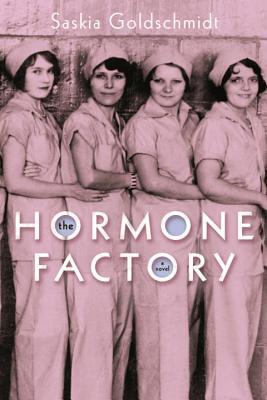
Not Just One Man's Ode to his Penis
Title: The Hormone Factory
Author: Saskia Goldschmidt
Publisher: Other Press, 11/11/14
One
could be forgiven for thinking, at first blush, that The Hormone Factory by
Saskia Goldschmidt is about a man's love affair with his most
important appendage.
The
book opens with Mordechai de Paauw, co-founder of one of the world's most
important Pharmaceutical companies, as he lies on his death bed pondering the
turns his life has taken and, most importantly, exactly what he might have done
to his sweet young caregiver - had his penis still been working effectively.
As
he lies in bed, wasting away, Mordechai shares a fascinating tale of his
creation of a pharmaceutical empire during a time when Europe was being slowly, but surely, overtaken by Hitler and his Nazis.
As Mordechai, who is Jewish, becomes more and more powerful, everything
he's ever worked for becomes threatened.
However, the true threat isn't the Nazis…It's Mordechai himself.
This
can be a challenging book to read because the narrator is one of the most
loathsome characters I've read in ages.
This is a man who is utterly selfish, egotistical, and power mad. Although there are flashes when he shows that
maybe, just maybe, he has some capacity to love, those flashes are brief and
soon overtaken by his ego.
While
there's a lot of sex in the book, and Mordechai himself is obsessed with it,
the book isn't really about sex at all.
It's about abuse. Rape. Brutality.
And a man who has the ability to lie to himself around every turn. Even as he abuses woman after woman,
Mordechai has the ability to tell himself that his partners are willing - and
truly believe it. He's truly a sickening
character.
The
atrocities of Hitler and the camps do come into play later in the book. While not a graphic representation at all,
what happens later is truly heartbreaking - and further shows our narrator in a
very unflattering light.
This
book is not for everyone. It's a very
long character study of a man with no saving grace. But it is exceedingly well written and leaves
you - not with any hope or feeling of redemption - but with the absolute
intention that you will not live your life the way that this man did.
Highly
recommended for those who don't mind stepping into the muck for a bit. You'll need to read something simple and
sweet after finishing this, but it's worth the read.
Monday, November 10, 2014
Pendergast Is Back!
Title: Blue Labyrinth
Authors: Douglas Preston & Lincoln Child
Publisher: Grand Central Publishing 11/11/14
Every
year, I have a 'must read' on my list.
The new Pendergast by Preston & Child. Now this year, they did something a little
sneaky. They gave away a free preview of
11 chapters on Amazon - guaranteed to whet any reader's appetite for the whole
thing.
I
was lucky. I got a review copy of the
entire book from Netgalley and I simply devoured it. And fair warning, I'm a hardcore Pendergast
fan, so this review might get a little…embarrassingly gushy!
The
opening is both simple and shocking.
Pendergast opens his front door to find someone from his past murdered
on his doorstep. He knows this is a
message to him…but what's the message?
And from whom? Thus begins a
chase around the world, from sunny California to the slums of Brazil. And the chase has a timeline - a timeline
that could result in the life (or death) of someone the readers know and love.
Blue
Labyrinth pulls no punches. There are
shocks around every turn. While not
every old character is back, D'Agosta, Margo and, of course, Constance play
pivotal roles in this drama - oddly, perhaps more than Pendergast himself at
times.
And,
of course, history plays its role as well, as we learn the tale of a mysterious
and dangerous elixir and the lives it destroyed.
To
be honest, I felt a bit like the last two Pendergast books were a tiney bit
lightweight - as though they were setting the reader up for something. This book is that something. It's a fast read. It's dark, tense, and Constance gets
righteously awesome. She's been showing
her strength more and more in the past books and in this one, she finally comes
into her own - and she is glorious.
And
of course Pendergast is still brilliant, quirky, and believe it or not he'll do
a couple of things that show he's more human than he likes to be. There are a couple of surprises here!
The
simple fact is that Preston and Child, yet again, deliver. An absolute five star read and highly
recommended!
Saturday, November 8, 2014
Three for the Road? A Catastrophic Grand Tour of Europe in "Us", by David Nicholls
I confess I'm still at a loss as to how this novel ended up in the company of books by Siri Hustvedt and Richard Flanagan on the longlist for this year's Man Booker Prize. On the other hand, it wasn't as bad a novel to read as some of the more ambitious books that shared that privilege and even moved on to the shortlist. It's perfectly a pleasant and entertaining novel dealing with themes that most of us can understand and relate to: its narrator, Douglas Petersen is a bumbling scientist who may be brilliant at what he does but can't put a foot right on the home front any more. Now his teenage son is about head off to college and his wakes him up in the middle of the night to inform him that "I think our marriage has run its course. His reaction? He's still fixated on the idea that the reason he's awake is that someone might be breaking in. "Well, at least it's not burglars," he replies.
The last ditch effort to rebuild his relationship with his son and save his marriage to Connie, Douglas calculates, may be a carefully planned "Grand Tour" to Europe, a final family vacation to the artistic capitals before Albie leaves for college. Even as the Petersens close up their home in Reading and head off to the Eurostar train, there are clues that Douglas has got it wrong, yet again: the minute-by-minute itinerary that, while it isn't laminated, might as well be, arouses the mirth and ridicule of his wife and son. But is Douglas as hapless a victim as he seems? To what extent is he complicit in his own plight, even if it's only because he's in denial? We learn the truth (a bit less dramatic than the book's publicity materials suggest, but still poignant and moving enough, as any human relationship failures are prone to be) through a series of flashbacks, since Nicholls alternates the "present day" chapters of the Petersen family's catastrophic Grand Tour with the evolution of Connie and Douglas's relationship and marriage, as Douglas tries to pinpoint just how it all went so wrong.
This structure, and the fact that it's set against the backdrop of a road trip, reminded me very strongly of Two for the Road, the 1967 film featuring Albert Finney and Audrey Hepburn as a long-married couple on a road trip to southern France. It's a non-linear movie -- at various points along the road they literally drive past earlier versions of themselves at (happier) stages of their lives making the same trip. That's somewhat the same narrative device that David Nicholls is using in this novel, only as the Finney and Hepburn characters realize what they had and lost, Douglas tries to understand whether something was always missing. Perhaps what he could bring to the marriage was never enough for Connie; but is it too late to be a father to Albie? When Albie abandons his parents after a scene in Amsterdam, setting off to go busking with a New Zealander called Cat, Douglas resolves to scour Europe for him to at least try. A series of dramatic twists and turns in the final pages make for some amusing role reversals, even if they aren't always convincing.Ultimately, I ended up pegging this as "bloke lit", the male equivalent of chick lit. Yes, it's well-written, but had it been written by a woman about a similar kind of domestic/relationship drama, I question whether it would have made the longlist of the Man Booker prize, as Nicholls' novel did. Yes, Douglas is insecure and has an over-developed propensity for doing or saying precisely the wrong thing at precisely the wrong time, but Nicholls belabors the point to where I began to cringe every time I spotted him preparing to do it yet again. And no, I didn't feel the kind of empathy I think that Nicholls intended I should for Douglas because he was just too predictable, and ultimately, not that interesting. He's a self-pitying sad sack, and it became boring. Too many of the revelations, betrayals and epiphanies alike, ended up feeling banal even when the events themselves weren't. Sure, Nicholls is a writer whose writing, at its best, is far, far better than average, and who juggled a complex structure with aplomb. But the plot and the characters never really grabbed me. Audrey Hepburn and Albert Finney are characters I've remembered for decades; in a few weeks, I'll be saying "Douglas and Connie who?"
********************
I received an Advance Review Copy of this book from the publisher via the Amazon Vine program, in exchange for my honest opinion.
Subscribe to:
Posts (Atom)